We spend hundreds, sometimes thousands, of dollars every year on topical serums, expensive moisturizers, and professional facials. But according to modern dermatology and nutritional science, the most potent skincare routine doesn’t start in your bathroom cabinet—it starts in your kitchen.
The “inner glow” is more than a beauty cliché; it’s a visible manifestation of your cellular health. Research into the Gut-Skin Axis has shown that what we ingest directly influences systemic inflammation, sebum production, and the rate of collagen breakdown. If you want a complexion that looks vibrant and resilient in 2026, you must nourish it from the inside out.
In this guide, we dive into the science-backed superfoods that provide the essential building blocks for bright, clear, and glowing skin.
The Science of the “Skincare Diet”
Before we look at specific foods, it’s important to understand the three pillars of nutritional skincare:
- Intracellular Hydration: Drinking water is vital, but eating “structured water” found in fruits and vegetables allows for better absorption and longer-lasting cellular hydration.
- Oxidative Stress Protection: Antioxidants neutralize free radicals—unstable molecules caused by pollution and UV rays—that break down collagen and lead to premature aging.
- Collagen Synthesis: Your body requires specific amino acids, Vitamin C, and minerals to produce the protein that keeps skin firm and “bouncy.”
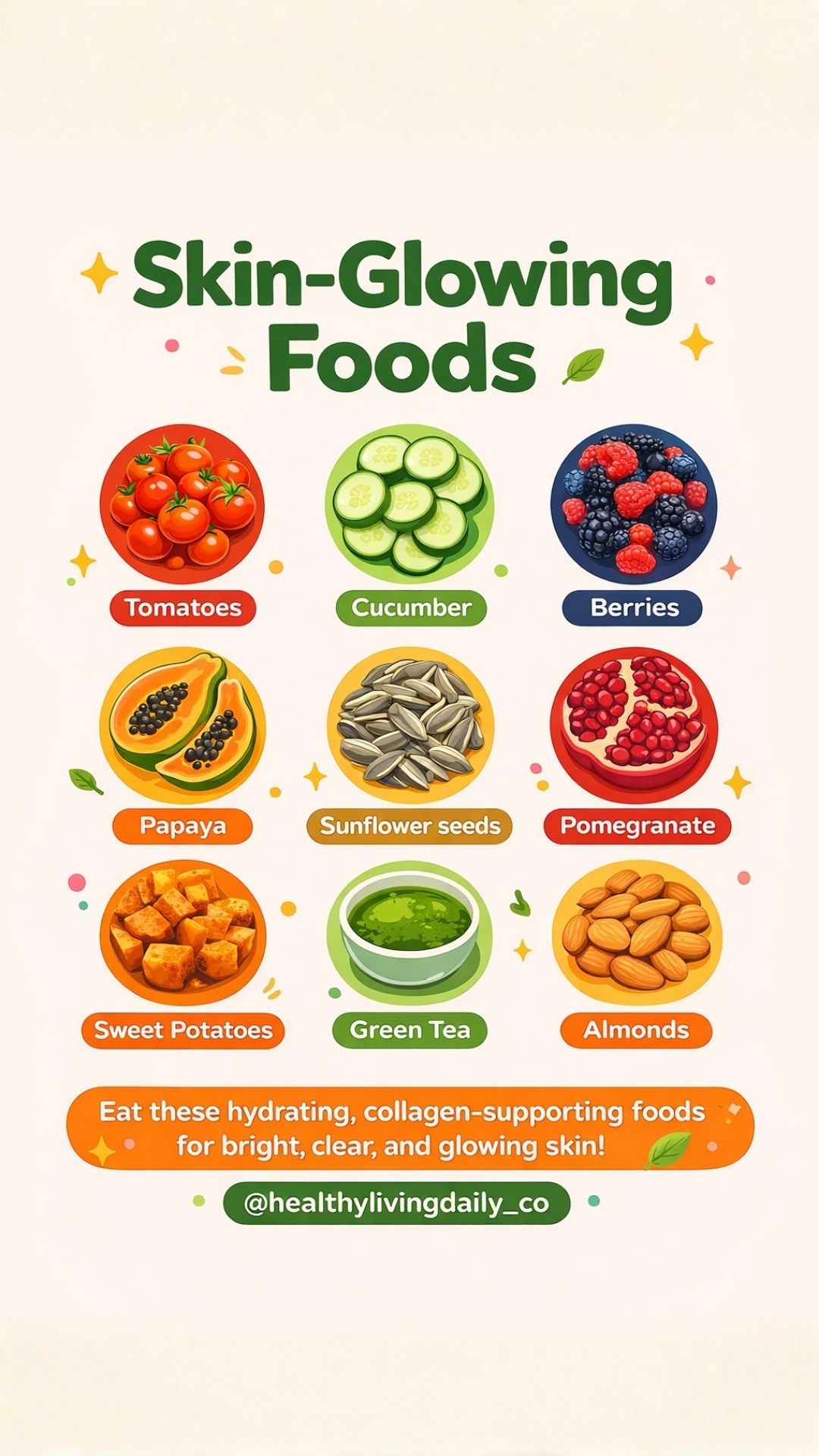
9 Best Foods for Glowing Skin
1. Tomatoes: Your Internal Sun Shield
Tomatoes are the primary source of lycopene, a powerful carotenoid that acts as a natural sunscreen. While it doesn’t replace your daily SPF, lycopene helps neutralize the free radicals produced by UV exposure.
- Expert Tip: Cooking tomatoes (like in a sauce or stew) actually increases the bioavailability of lycopene compared to eating them raw.
2. Cucumber: The Hydration Hero
Composed of about 96% water, cucumbers are essential for flushing out toxins. More importantly, they contain silica, a trace mineral that strengthens connective tissues and improves skin elasticity.
- Skin Benefit: Regular consumption helps reduce puffiness and maintains that “glass skin” look.
3. Berries: The Antioxidant Powerhouse
Blueberries, strawberries, and blackberries are rich in anthocyanins and Vitamin C. Vitamin C is a mandatory co-factor for collagen synthesis. Without it, your body cannot effectively repair skin tissue.
- The Science: Anthocyanins protect the skin’s delicate capillary structure, reducing the appearance of redness and spider veins.
4. Papaya: Nature’s Digestive Exfoliant
Papaya contains a unique enzyme called papain. While often used in topical masks, eating papaya helps improve digestion. A healthy gut means fewer inflammatory skin breakouts (like adult acne or eczema).
- Nutrient Profile: It’s also loaded with Vitamin A (as beta-carotene), which promotes healthy cell turnover.
5. Sunflower Seeds: The Elasticity Booster
These tiny seeds are one of the best sources of Vitamin E, a fat-soluble antioxidant that protects skin cell membranes from oxidative damage.
- Mineral Support: They also provide selenium, which clinical studies suggest can help protect against skin cancer and UV damage.
6. Pomegranate: The Anti-Aging Elixir
Pomegranates are famous for ellagic acid and punicalagins. These compounds have been shown to preserve existing collagen in the skin and improve blood flow, giving you a natural, rosy “flush.”
7. Sweet Potatoes: The Natural Glow-Maker
Rich in beta-carotene, sweet potatoes are converted into Vitamin A in the body. This nutrient is responsible for that healthy, sun-kissed tint often associated with high vegetable intake.
- Retinol Alternative: Think of this as your body’s internal version of retinol, helping with skin cell regeneration.
8. Green Tea: Detox and Clarity
Green tea is packed with EGCG (epigallocatechin-3-gallate). This polyphenol is highly anti-inflammatory and anti-microbial.
- Acne Prevention: EGCG is known to reduce sebum (oil) production, making it a staple for anyone struggling with hormonal breakouts or oily skin.
9. Almonds: The Lipid Barrier Protector
Your skin needs healthy fats to stay supple. Almonds provide Omega-3 fatty acids and Zinc, which help maintain the skin’s lipid barrier. A strong barrier keeps moisture in and irritants out.
Practical Tips: Building Your “Skin Plate”
Knowing what to eat is one thing; making it a habit is another. Here is how to incorporate these foods into your daily routine:
- The Morning Glow-Up: Start your day with a green tea instead of a second cup of coffee. Add a handful of berries and sunflower seeds to your oatmeal or Greek yogurt.
- The Power Lunch: Include sliced cucumbers and tomatoes in every salad. Use a lemon-based dressing to add extra Vitamin C for better nutrient absorption.
- Skin-Centric Dinner: Roast sweet potatoes as a side dish and use pomegranate seeds as a vibrant garnish for proteins or grains.
Beyond the Plate: The Holistic Approach
While diet is a cornerstone, your 2026 skincare goals require a multi-faceted approach:
- Consistent SPF: Diet protects from within, but topical SPF is non-negotiable for external protection.
- Beauty Sleep: This is when your skin goes into “repair mode,” utilizing the nutrients you’ve eaten throughout the day.
- Stress Management: High cortisol levels (the stress hormone) can lead to collagen breakdown and increased oiliness.
Ready to Transform Your Skin?
Eating for your skin is an investment that pays off in long-term health and confidence. If you’re ready to take the next step in your wellness journey, we’ve created a resource to help you stay on track.
👉 [Download Our Free 7-Day “Glow From Within” Meal Plan] – Get chef-curated recipes featuring all 9 superfoods, designed to give you visible results in just one week.
Frequently Asked Questions (FAQs)
How long does it take to see results from a skincare diet? Because the skin cell turnover cycle takes approximately 28 to 40 days, you should expect to see noticeable changes in your complexion after 4 to 6 weeks of consistent healthy eating.
Can these foods replace my current skincare products? No. Think of nutrition and topical skincare as a partnership. Your products protect and treat the surface, while your diet builds the foundation from underneath.
What foods should I avoid for better skin? To maximize your glow, try to limit high-glycemic foods (sugary snacks and white bread) and highly processed vegetable oils, as these can trigger inflammation and “sugar sag” (glycation).
Disclaimer: This information is for educational purposes only and does not replace professional medical advice. Always consult with a healthcare provider or registered dietitian before making significant changes to your diet.