When most people think about heart health, they immediately think about cutting out salt. While reducing sodium is important, there is another side to the equation that is often overlooked: Potassium.
According to the latest nutritional surveys, the vast majority of Americans are not meeting the recommended daily intake of potassium. This essential mineral acts as a “silent hero,” working behind the scenes to balance fluids, support muscle recovery, and keep your heart beating steadily.
If you are looking to boost your energy, manage your blood pressure, or simply optimize your diet, focusing on foods high in potassium is one of the most effective steps you can take. In this guide, we will explore the best sources of this vital nutrient and how to easily incorporate them into your daily routine.
Why Your Body Craves Potassium
Potassium is more than just a mineral; it is an electrolyte that carries a small electrical charge, allowing your cells to communicate and function. Here is why it belongs at the top of your priority list:
- Blood Pressure Management: Potassium helps your body flush out excess sodium through urine. More importantly, it helps ease the tension in your blood vessel walls, which directly helps lower blood pressure.
- Muscle and Nerve Function: Ever experienced a painful leg cramp after a workout? Potassium is crucial for muscle contractions and nerve signals. For the active American lifestyle, it is the key to faster recovery.
- Stroke Prevention: Research consistently shows that a diet rich in potassium is linked to a significantly lower risk of stroke and cardiovascular disease.
[CTA: Boost Your Heart Health Today]
Want a personalized meal plan tailored to your cardiovascular goals? [Click here to download our Free 2026 Heart-Healthy Grocery Guide!]
Deep Dive: 6 Potassium Superstars You Need to Know
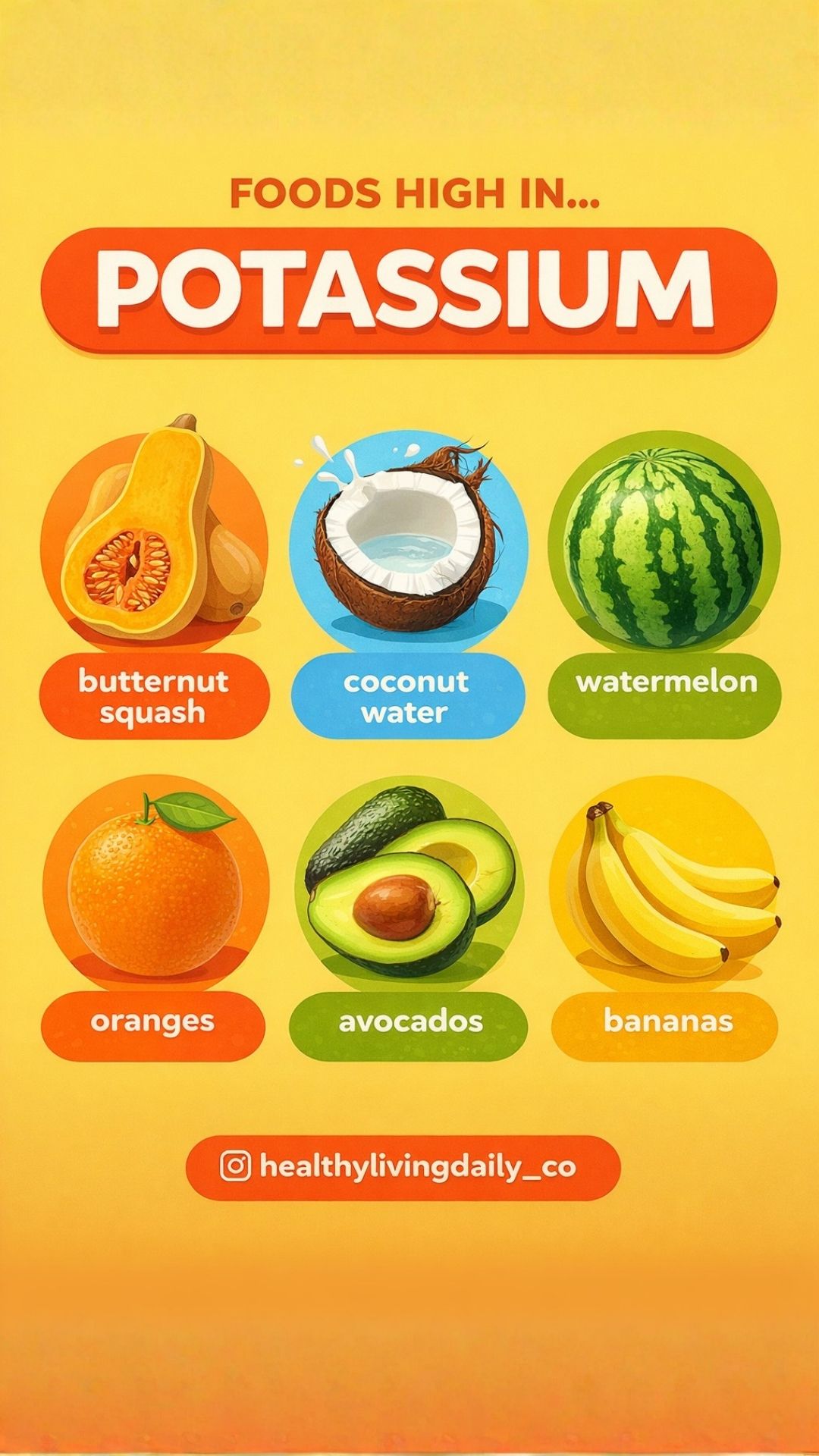
While the humble banana is the most famous source, it is far from the only one. Let’s look at the powerhouse foods often featured in top nutritional infographics:
1. Avocados
Avocados are a nutritional gold mine. One medium avocado contains approximately 690mg of potassium—significantly more than a banana. They are also packed with heart-healthy monounsaturated fats and fiber, making them a perfect choice for those on Keto or low-carb diets.
2. Bananas
The classic “gold standard” for a reason. With about 422mg per medium fruit, bananas are the ultimate portable, pre-workout snack. They provide quick energy and help prevent muscle fatigue.
3. Butternut Squash
This vibrant winter squash is a nutrient-dense “superfood.” One cup of cooked butternut squash delivers a massive dose of potassium along with Vitamin A and fiber. It’s an excellent base for hearty autumn soups or roasted side dishes.
4. Coconut Water
Often called “Nature’s Gatorade,” coconut water is a fantastic way to hydrate. It is rich in electrolytes, specifically potassium, making it a superior alternative to sugary sports drinks for post-exercise recovery.
5. Watermelon
Watermelon isn’t just for summer picnics. Because it has a high water content, it helps with hydration while providing a healthy amount of potassium and lycopene, a powerful antioxidant for heart health.
6. Oranges
Beyond their famous Vitamin C content, oranges are great sources of potassium. Drinking a glass of fresh-squeezed orange juice or eating the whole fruit provides a synergistic boost for both your immune system and your blood vessels.
Bonus Foods to Round Out Your Diet
To truly optimize your intake, consider adding these high-potassium staples to your pantry:
- Baked Potatoes (with Skin): Surprisingly, a medium baked potato with the skin on contains nearly 900mg of potassium—double that of a banana!
- Leafy Greens: Spinach and Swiss Chard are incredibly dense in minerals. Sauté them with a bit of garlic for a quick health boost.
- Legumes: White beans, adzuki beans, and lentils are affordable, shelf-stable, and packed with plant-based protein and potassium.
How Much Potassium Do You Actually Need?
The National Academies of Sciences, Engineering, and Medicine suggests that healthy adults should aim for approximately 3,400mg (for men) and 2,600mg (for women) per day, though some guidelines suggest up to 4,700mg for optimal blood pressure management.
In the typical American diet, the ratio of sodium to potassium is often skewed toward high salt. By increasing your intake of whole, plant-based foods, you can restore this balance and protect your long-term health.
Practical Tips for a Potassium-Rich Lifestyle
- Start Your Morning Right: Add half an avocado to your toast or slice a banana into your oatmeal.
- The Smoothie Secret: Blend spinach, frozen banana, and coconut water for an electrolyte-packed breakfast.
- Smart Cooking: Try steaming or roasting your vegetables. Boiling them can cause potassium to leach out into the water, reducing the nutritional value.
[CTA: Join Our Wellness Community]
Stay ahead of the curve with the latest nutrition science. [Subscribe to our Newsletter] for weekly recipes and expert health tips delivered straight to your inbox.
Safety & Precautions
While potassium is essential, “more” isn’t always “better” for everyone.
- Kidney Health: If you have Chronic Kidney Disease (CKD) or are taking certain blood pressure medications (like ACE inhibitors), your kidneys may struggle to remove excess potassium. Always consult with your healthcare provider before significantly increasing your intake.
- Whole Foods First: Focus on getting your minerals from whole food sources rather than supplements, as food provides a complex matrix of fiber and antioxidants that supplements cannot replicate.
Conclusion
Improving your heart health doesn’t have to be complicated. By prioritizing foods high in potassium—like avocados, squash, and leafy greens—you are giving your body the tools it needs to maintain healthy blood pressure and peak physical performance.
Start small: pick two foods from this list to add to your grocery cart this week. Your heart will thank you!
Which of these potassium-rich foods is your favorite? Do you prefer a savory avocado toast or a refreshing watermelon snack? Let us know in the comments below!