Did you know that according to the USDA, nearly 95% of American adults fail to meet the recommended daily intake of dietary fiber? This “fiber gap” isn’t just a statistic; it’s a significant contributor to common health issues like sluggish digestion, weight gain, and unstable blood sugar levels.
While whole grains and legumes are often the stars of the fiber conversation, nature’s candy—fruit—offers some of the most delicious and potent ways to hit your goals. In this guide, we’re ranking the top high-fiber fruits available in your local grocery store and showing you exactly how to incorporate them into your lifestyle for better gut health.
Why Fiber is the Secret to Longevity and Wellness
Fiber is a type of carbohydrate that your body can’t digest. Instead of being broken down into sugar molecules, it passes through your system, performing critical “housekeeping” tasks along the way.
Dietary fiber is generally categorized into two types:
- Soluble Fiber: Dissolves in water to form a gel-like material. It helps lower blood cholesterol and glucose levels.
- Insoluble Fiber: Promotes the movement of material through your digestive system and increases stool bulk, making it a hero for those struggling with irregularity.
The FDA recommends a daily value (DV) of 25 grams for women and 38 grams for men. Choosing the right fruits can make reaching these numbers significantly easier—and far more enjoyable.
Ready to transform your health? Download our 2026 Gut Health Grocery Guide for a complete list of fiber-rich foods and easy meal prep ideas!
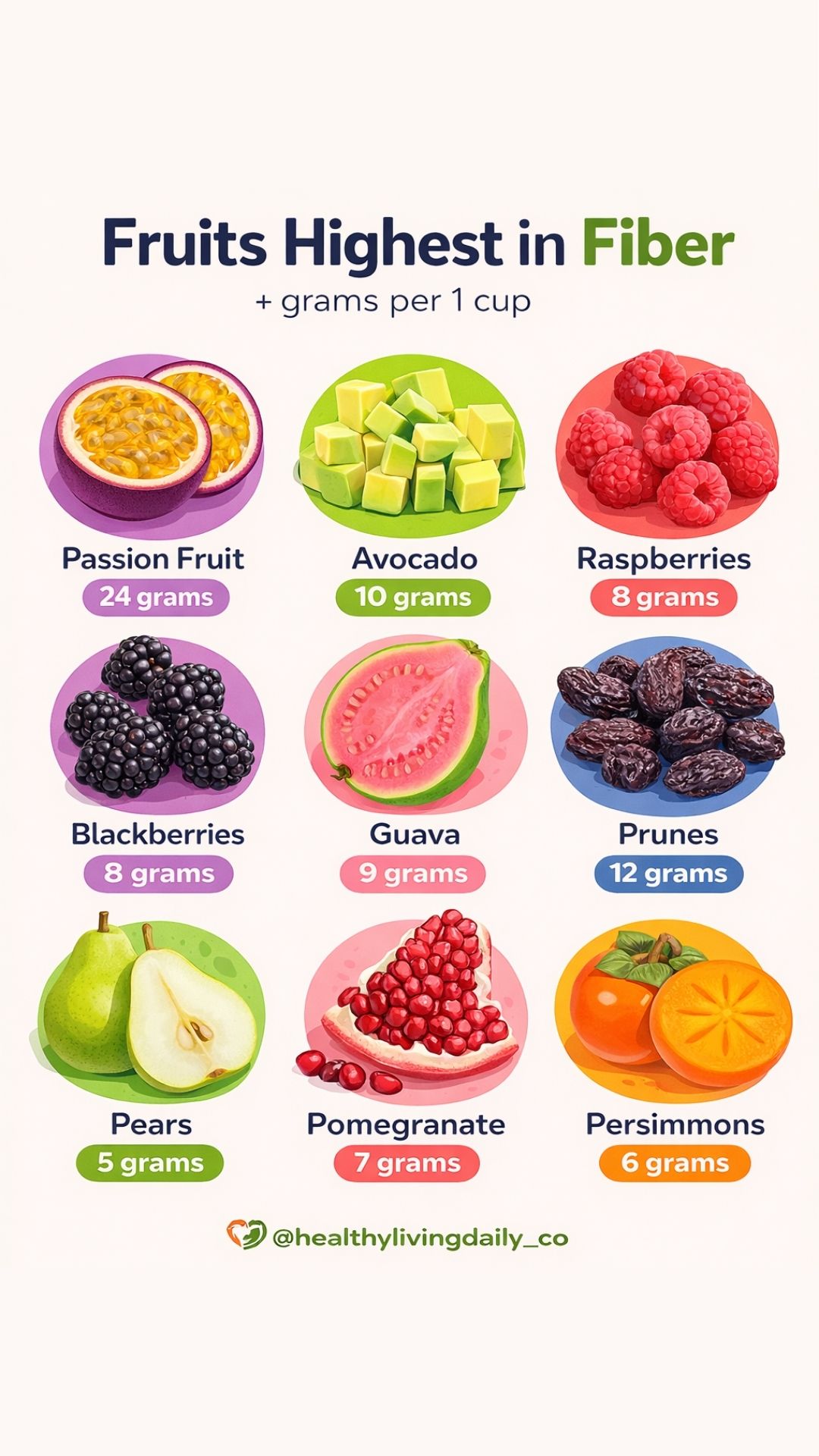
The Top High-Fiber Fruits Ranked (Per 1 Cup Serving)
Using the latest nutritional data, we’ve identified the “heavy hitters” in the produce aisle. Here is how they stack up.
1. Passion Fruit (24g per cup)
The undisputed heavyweight champion of fiber. A single cup of passion fruit contains a staggering 24 grams of fiber—nearly 100% of the daily requirement for women. Most of this fiber is found in the edible seeds, which also provide a satisfying crunch and a dose of healthy antioxidants.
- Best for: Adding to Greek yogurt or blending into tropical smoothies.
2. Prunes (12g per cup)
Prunes (dried plums) have long been the gold standard for digestive health, and for good reason. With 12 grams of fiber per cup, they contain both soluble and insoluble fiber, along with sorbitol, a natural sugar alcohol that helps soften stool.
- Health Bonus: They are also exceptionally high in Vitamin K, which supports bone density.
3. Avocado (10g per cup)
Often mistaken for a vegetable, the avocado is actually a nutrient-dense fruit. One cup provides 10 grams of fiber alongside heart-healthy monounsaturated fats. This combination of fiber and fat promotes long-lasting satiety, making it a perfect tool for weight management.
- Pro-tip: Swap mayo for mashed avocado on your sandwiches to sneak in extra fiber.
4. Guava (9g per cup)
Guava is a tropical powerhouse. Beyond its 9 grams of fiber, it contains more Vitamin C than an orange, providing a dual boost to your immune system and your gut lining.
5. Raspberries & Blackberries (8g per cup)
Berries are among the best fruits for those on a low-carb or keto-friendly diet. At 8 grams of fiber per cup and relatively low sugar content, raspberries and blackberries offer high nutrient density without the blood sugar spikes associated with tropical fruits.
6. Pomegranate (7g per cup)
The “jewels” of the pomegranate, known as arils, contain 7 grams of fiber per cup. They are also rich in polyphenols, which act as prebiotics—feeding the “good” bacteria in your gut microbiome.
7. Persimmons (6g per cup)
A seasonal favorite, persimmons are surprisingly high in fiber. They have a honey-like sweetness and a firm texture that works beautifully in autumn salads or as a stand-alone snack.
8. Pears (5g per cup)
The humble pear is a staple for a reason. One medium pear (approx. 1 cup sliced) offers 5 grams of fiber.
- Expert Advice: Always eat the skin! The peel contains the majority of the pear’s insoluble fiber and skin-supporting antioxidants.
How to Increase Your Fiber Intake Without the Bloat
While it’s tempting to start eating 40 grams of fiber today, doing so too quickly can lead to gas, bloating, and discomfort. Follow these expert tips for a smooth transition:
- Start Slow: Add one high-fiber fruit to your diet every 2-3 days to let your gut microbiome adjust.
- Hydrate, Hydrate, Hydrate: Fiber acts like a sponge. Without enough water, it can actually cause constipation instead of relieving it.
- The “Fiber Bowl” Strategy: Create a daily habit by mixing 1/2 cup of raspberries with a sliced pear and a sprinkle of pomegranate seeds for a 10g fiber boost in one sitting.
Is your digestion holding you back? Take our Free 2-Minute Gut Health Quiz to get a personalized nutrition plan tailored to your body’s needs in 2026!
Frequently Asked Questions
Which fruit has the most fiber?
Passion fruit leads the list with a massive 24 grams of fiber per cup. However, for a more common snack, raspberries and blackberries are excellent daily choices.
Is it better to get fiber from fruit or supplements?
While supplements can help, whole fruits are superior because they provide a synergistic blend of vitamins, minerals, and phytonutrients that powders cannot replicate.
Can I get too much fiber?
It is rare, but consuming over 70g of fiber daily can lead to nutrient malabsorption and digestive distress. Aim for the 25g-38g range for optimal health.
Conclusion: Small Changes, Big Results
Achieving better gut health doesn’t require a radical overhaul of your life. By simply swapping your morning muffin for a cup of raspberries or adding avocado to your lunch, you are taking a significant step toward preventing chronic disease and feeling your best.
Start today: Which of these high-fiber fruits will you add to your grocery cart this week?
Shop our curated selection of Organic Superfoods here.