Did you know that despite the abundance of food, nearly 95% of Americans fail to meet the recommended daily fiber intake? According to dietary guidelines, adults should aim for 25 to 38 grams of fiber per day, yet the average American only consumes about 15 grams.
This “Fiber Gap” is a significant contributor to common health issues, including sluggish digestion, weight gain, and unstable blood sugar levels. Fortunately, closing this gap doesn’t require complex supplements. Nature has provided the perfect solution: High-fiber fruits.
In this guide, we break down the top 12 fruits to help you hit your nutritional goals, improve your gut microbiome, and feel your best in 2026.
Quick Tip: Increasing fiber intake too quickly can cause bloating. Start slow and drink plenty of water to help the fiber move through your system efficiently.
1. The Fiber Superstars: The Heavy Hitters
If you are looking for the maximum “bang for your buck,” these fruits are the undisputed champions of the produce aisle.
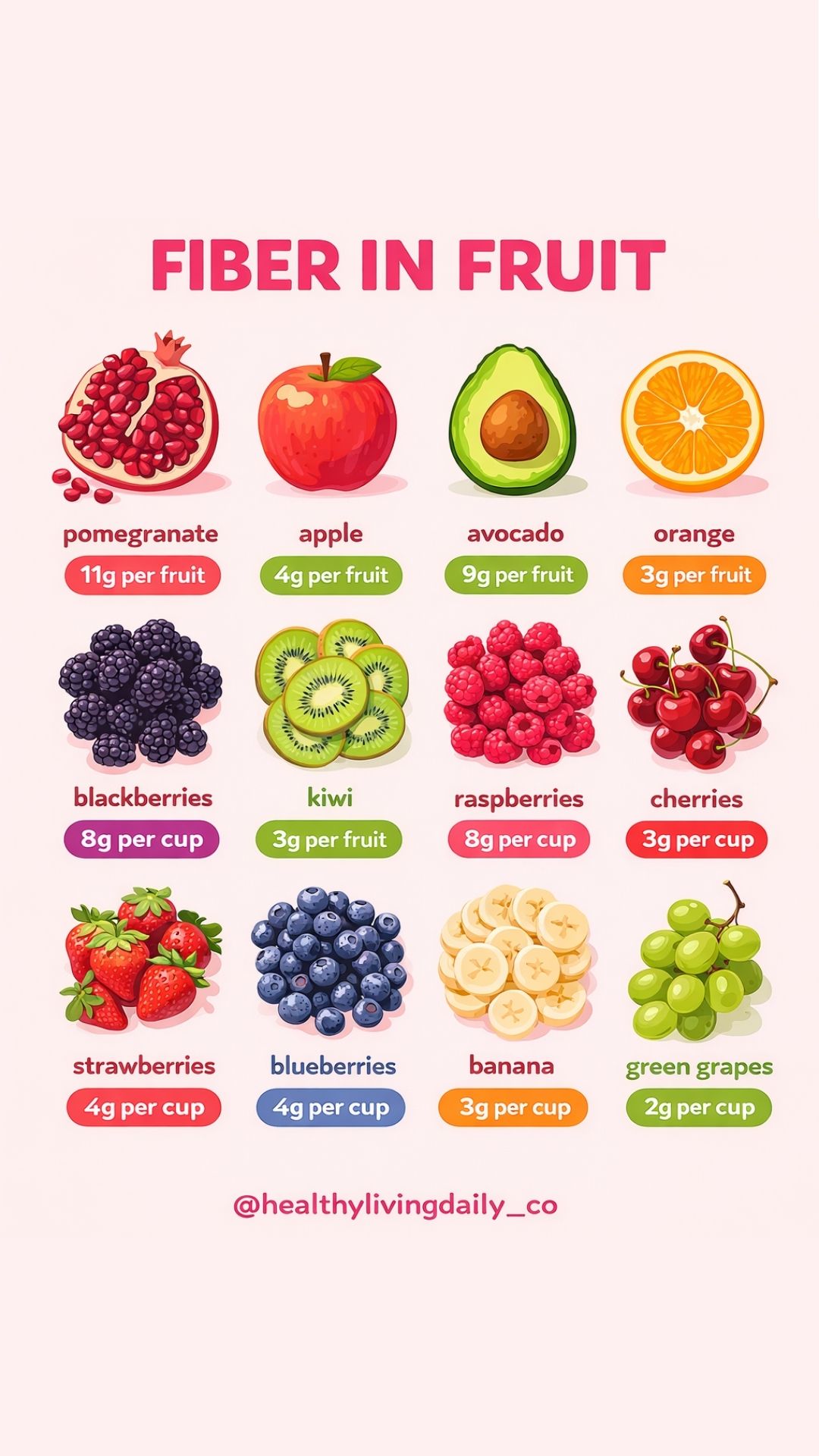
Pomegranate (11g per fruit)
The pomegranate is often called the “King of Fiber.” With a staggering 11 grams per fruit, adding these ruby-red arils to your diet provides nearly half of your daily requirement. Beyond fiber, pomegranates are packed with punicalagins—powerful antioxidants that support heart health and reduce inflammation.
Avocado (9g per fruit)
While most people associate avocados with healthy monounsaturated fats, they are secretly fiber powerhouses. A single avocado contains 9 grams of fiber. This unique combination of fat and fiber keeps you full for longer, making it an essential tool for weight management and metabolic health.
Raspberries & Blackberries (8g per cup)
Berries are nature’s candy, but with a functional twist. Both raspberries and blackberries offer 8 grams of fiber per cup. They are low in sugar and high in polyphenols, making them the perfect choice for anyone monitoring their glycemic index while trying to optimize digestion.
2. The Daily Staples: Convenient & Reliable
These fruits are likely already in your kitchen. By making small adjustments, like eating the skin, you can significantly boost your intake.
- Apples (4g per fruit): The classic “apple a day” works because of pectin, a type of soluble fiber found in the skin. Always eat your apples whole rather than juiced to retain the fiber content.
- Bananas (3g per cup): A favorite for athletes, bananas provide a quick energy boost along with 3 grams of fiber. They also contain resistant starch, which acts as a prebiotic to feed your beneficial gut bacteria.
- Oranges (3g per fruit): Known for Vitamin C, oranges also provide 3 grams of fiber. The white pith (the stringy part) is actually where much of the fiber resides.
- Kiwi (3g per fruit): Kiwi contains a unique enzyme called actinidin, which aids in protein digestion. Combined with 3 grams of fiber, it is one of the best fruits for preventing bloating after a heavy meal.
3. Refreshing Low-Calorie Fiber Sources
For those looking for hydration and a lighter snack, these fruits offer a steady supply of nutrients without the heavy caloric load.
- Strawberries & Blueberries (4g per cup): Perfect for snacking, these berries offer 4 grams of fiber. They are easy to toss into a morning smoothie or cereal bowl.
- Cherries (3g per cup): Beyond their 3 grams of fiber, cherries contain melatonin, which can help regulate sleep cycles—a critical component of overall digestive health.
- Green Grapes (2g per cup): While lower in fiber than berries, grapes are high in water content and provide a gentle 2 grams of fiber to keep your digestive tract hydrated and moving.
4. Nutritional Deep Dive: Why These Numbers Matter
Soluble vs. Insoluble Fiber
Fruits provide a balance of both types of fiber:
- Soluble Fiber: Dissolves in water to form a gel-like material. It helps lower blood cholesterol and glucose levels.
- Insoluble Fiber: Promotes the movement of material through your digestive system and increases stool bulk, making it a “must-have” for regular bowel movements.
Understanding Serving Sizes
Note that fiber content is often measured “per fruit” or “per cup.” When meal planning, pay attention to these units to ensure you are accurately tracking your progress toward that 25-38g daily goal.
5. Practical Tips to Increase Fruit Intake in the US Diet
Integrating more fiber into your busy American lifestyle doesn’t have to be a chore:
- Upgrade Your Breakfast: Swap sugary cereals for Greek yogurt topped with a cup of raspberries and pomegranate seeds.
- The Power Lunch: Add half an avocado to your turkey sandwich or toss apple slices into your kale salad.
- Smart Snacking: Keep a bowl of washed strawberries or oranges on your desk to avoid reaching for processed chips.
- The “Fiber-Bomb” Smoothie: Blend spinach, blueberries, a kiwi, and a tablespoon of chia seeds for a drink that packs over 10g of fiber before you even leave for work.
Conclusion: Start Your Journey to Better Health Today
Hitting your fiber goals is one of the simplest ways to transform your health in 2026. By prioritizing pomegranates, avocados, and berries, you aren’t just eating fruit—bypassing the “Fiber Gap” and giving your gut the fuel it needs to thrive.
Share this guide with a friend who needs a health boost!
Disclaimer: This information is for educational purposes only. Always consult with a healthcare professional or registered dietitian before making significant changes to your diet.