In the fast-paced “hustle culture” of 2026, many Americans find themselves hitting a wall by 2:00 PM. Whether it’s the lingering brain fog after a long morning of Zoom calls or a sudden lack of motivation to hit the gym, the culprit is often the same: a dip in your dopamine levels.
Dopamine is frequently dubbed the “reward molecule.” It is the primary neurotransmitter responsible for motivation, focus, and that feeling of satisfaction when you check a task off your to-do list. While modern life often pushes us toward “cheap dopamine” hits—like mindless scrolling or sugary snacks—these lead to inevitable crashes.
The good news? You can support your brain’s natural production of this vital chemical through targeted nutrition. By focusing on precursors like Tyrosine and supporting cofactors, you can build a sustainable foundation for mental clarity.
How Nutrition Impacts Your Brain’s Reward System
Your brain doesn’t create dopamine out of thin air. It requires specific raw materials, primarily an amino acid called L-tyrosine. Once ingested, your body converts tyrosine into L-dopa, which then becomes dopamine.
Furthermore, the Gut-Brain Axis plays a critical role. Research in nutritional neuroscience suggests that up to 50% of dopamine is produced in the gut. This means a diet rich in fiber and antioxidants isn’t just good for your digestion; it’s a requirement for your mental health.
The Top 9 Dopamine-Boosting Superfoods
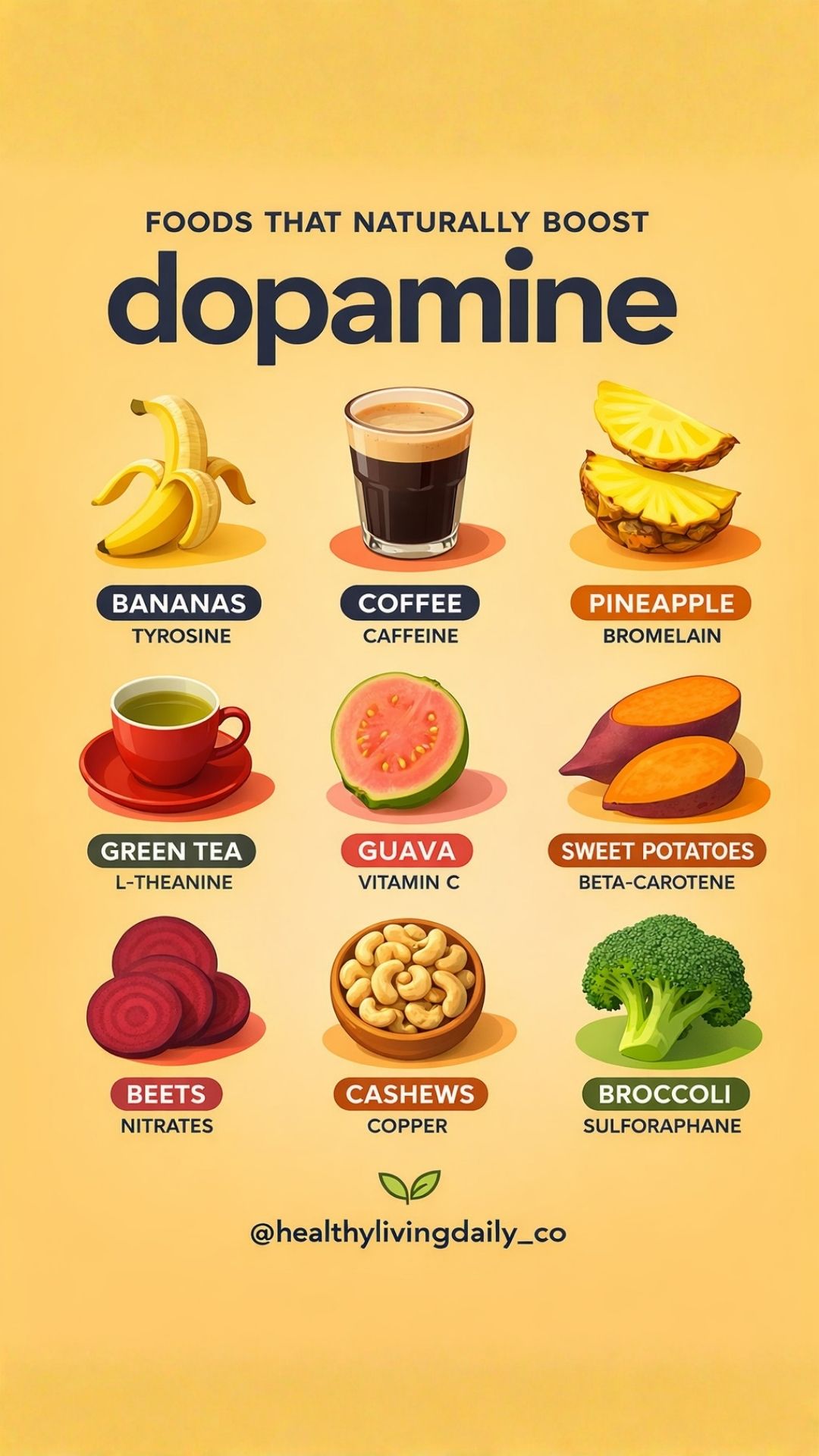
Based on recent nutritional data, here are nine powerhouse foods you should integrate into your weekly meal prep to keep your brain firing on all cylinders.
1. Bananas: The Tyrosine Powerhouse
Bananas are one of the most accessible sources of tyrosine. They also contain high levels of Vitamin B6, which acts as a catalyst for neurotransmitter synthesis.
- Quick Tip: Add a sliced banana to your morning oatmeal or eat one 30 minutes before a workout for sustained focus.
2. Coffee: The Receptor Stimulant
Caffeine doesn’t just wake you up; it increases the expression of dopamine receptors in the brain. This makes the dopamine you already have more effective.
- Pro Strategy: Stick to 1-2 cups before noon to avoid disrupting your sleep cycle, which is essential for receptor recovery.
3. Pineapple: Bromelain & Serotonin Balance
While often associated with Vitamin C, pineapples contain Bromelain, an enzyme that reduces systemic inflammation. Low inflammation in the brain is key to maintaining healthy neurotransmitter levels.
4. Green Tea: The L-Theanine Calm
Unlike the “jittery” energy of soda, Green Tea contains L-Theanine. This amino acid crosses the blood-brain barrier and increases dopamine levels while simultaneously promoting alpha-wave activity for “relaxed alertness.”
5. Guava: Vitamin C for Synthesis
Vitamin C is a mandatory cofactor in the conversion of dopamine. Guava is an antioxidant bomb, protecting your dopamine-producing neurons from oxidative stress caused by environmental pollutants.
6. Sweet Potatoes: Beta-Carotene & Brain Protection
Sweet potatoes are rich in beta-carotene and complex carbohydrates. The steady release of glucose provides the energy your brain needs to synthesize neurochemicals without the spike-and-crash of refined sugar.
7. Beets: Nitrates for Oxygenated Focus
Beets are famous for their high concentration of Nitrates. These compounds convert into nitric oxide, which dilates blood vessels and improves blood flow to the frontal lobe—the area of the brain responsible for executive function and focus.
8. Cashews: Essential Copper & Magnesium
Cashews provide a double-whammy of Magnesium and Copper. Magnesium helps regulate the nervous system, while Copper is an essential mineral for the enzymes that turn precursors into active dopamine.
9. Broccoli: Sulforaphane & Neuroprotection
Broccoli contains Sulforaphane, a potent compound that triggers the body’s natural detox pathways. By reducing neuro-inflammation, broccoli creates an ideal environment for healthy dopamine signaling.
Beyond the Plate: Lifestyle Synergies
Nutrition is the fuel, but your habits are the engine. To maximize these dietary gains:
- Prioritize Sleep: Dopamine receptors “reset” while you sleep. Aim for 7-9 hours of quality rest.
- Morning Sunlight: Exposure to natural light within 30 minutes of waking helps regulate your circadian rhythm and dopamine production.
- Cold Exposure: A 30-second cold shower has been shown to increase baseline dopamine levels by up to 250%.
3 Simple Dopamine-Boosting Meal Ideas
- The Morning Motivator: A smoothie with 1 frozen banana, 1 tablespoon of cashew butter, and a splash of unsweetened almond milk.
- The Brain Power Salad: Roasted beets, sweet potato cubes, and steamed broccoli over a bed of quinoa.
- The Focus Afternoon: A cup of high-quality Matcha (Green Tea) paired with a handful of raw cashews.
Conclusion: Start Small for Big Wins
You don’t need a total pantry overhaul to start feeling better. Try picking two foods from this list—perhaps bananas and green tea—and incorporate them into your routine this week. Small, consistent shifts in your nutrition are the most effective way to reclaim your focus and boost your mood naturally.
🧠 Optimize Your Mental Performance Today
Ready to take your brain health to the next level? [Download our Free 2026 Brain Nutrition Guide] to get a full 7-day meal plan designed to eliminate brain fog and supercharge your motivation!
FAQ: People Also Ask
Q: How long does it take for food to affect my dopamine levels? While some foods (like coffee or green tea) offer immediate effects within 30-60 minutes, the structural benefits of amino acids like Tyrosine usually take 1-2 weeks of consistent intake to notice a significant shift in baseline mood.
Q: Can I take dopamine supplements instead? While supplements exist, “food first” is always the safer and more bioavailable route. Always consult with a healthcare professional before starting new supplements, especially if you are taking medication for ADHD or depression.
Q: Are there foods that deplete dopamine? Yes. High-sugar, ultra-processed foods cause a massive “spike” followed by a “crash,” which can desensitize your dopamine receptors over time, leading to lower motivation and irritability.
Disclaimer: This content is for informational purposes only and does not constitute medical advice. Always consult with a qualified healthcare provider regarding a medical condition or dietary changes.