Medical Disclaimer: The information in this article is for educational purposes only and does not substitute for professional medical advice, diagnosis, or treatment. Always seek the advice of your physician before making dietary changes.
Do you ever feel “heavy” or uncomfortably bloated after a meal, even when you’ve eaten healthy? In the fast-paced 2026 wellness landscape, we often focus on what we eat, but we forget about how we break it down.
Digestive enzymes are the unsung heroes of your metabolism. They are specialized proteins that act like biological scissors, cutting down complex fats, proteins, and carbohydrates into tiny molecules your body can actually use. While your pancreas produces many of these, aging, stress, and the Standard American Diet can leave your system sluggish.
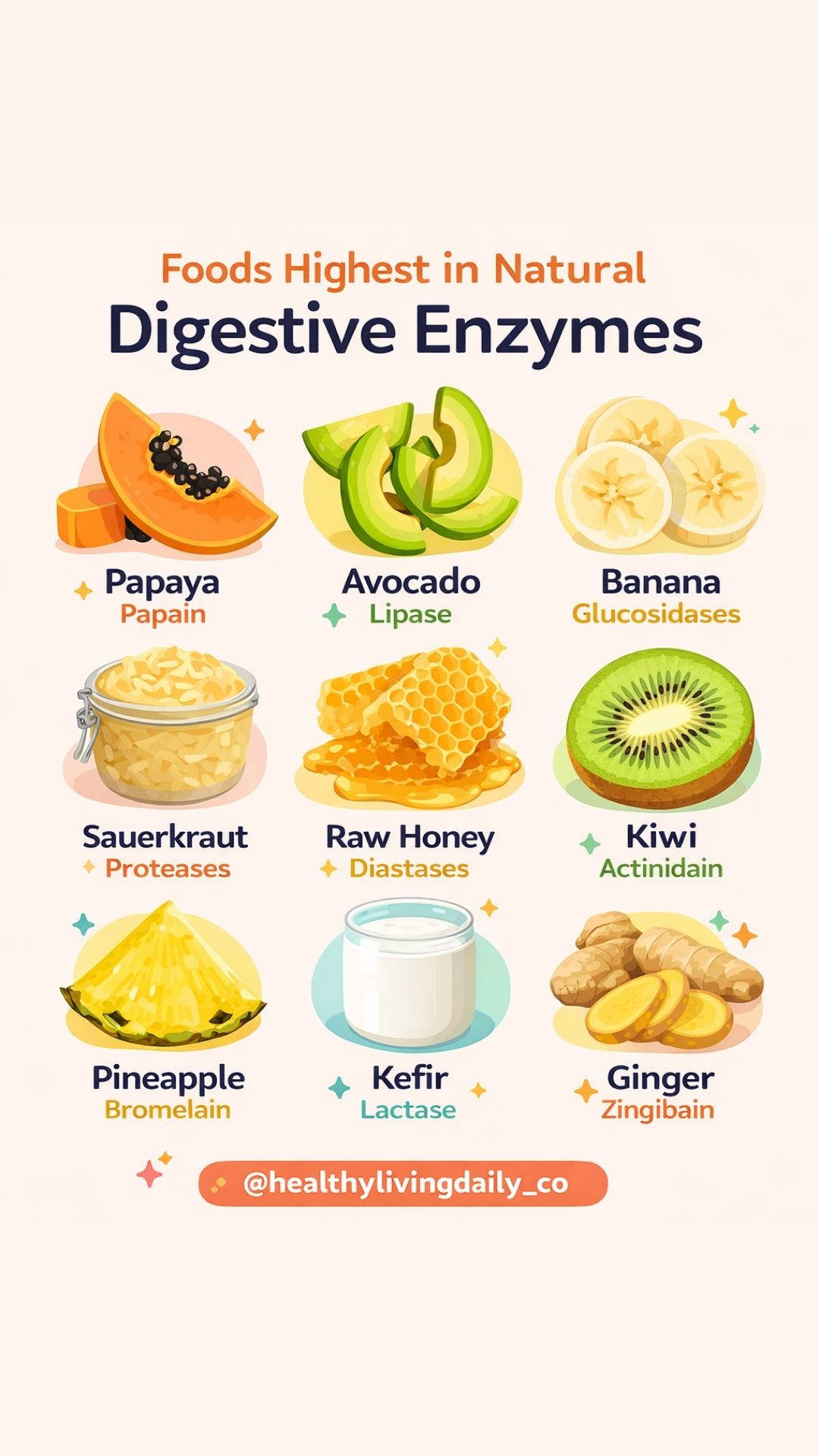
The good news? Mother Nature has packed these “spark plugs” of digestion into delicious, whole foods. Here are the 9 best foods highest in natural digestive enzymes to help you reclaim your gut health today.
1. Papaya: The Protein Specialist
If you’ve ever used papaya in a marinade, you know it’s a powerful meat tenderizer. This is thanks to Papain, a robust protease found in the fruit.
Papain is exceptionally effective at breaking down tough protein fibers. For those who feel sluggish after a high-protein meal, adding a few slices of fresh papaya can significantly ease the transition from the stomach to the small intestine. To get the most benefit, enjoy it while it’s still slightly firm but ripe.
2. Pineapple: The Inflammatory Fighter
Pineapple contains Bromelain, a group of enzymes that doesn’t just digest protein—it also supports a healthy inflammatory response in the gut.
Bromelain is unique because it remains active in both acid and alkaline environments, making it a versatile digestive aid. Pro-tip: The highest concentration of bromelain is found in the core of the pineapple, so don’t be afraid to juice or finely chop the center part.
3. Kiwi: Small Fruit, Big Impact
Kiwi is a powerhouse for anyone struggling with “regularity.” It contains Actinidain, a protease that specifically targets the digestion of proteins found in meat, dairy, and legumes.
Clinical studies have shown that actinidain improves the rate at which the stomach empties, reducing that “overly full” sensation after dinner. It’s the perfect dessert for a heavy meal.
4. Avocado: The Fat Digester
While most fruits are high in sugar, avocados are rich in healthy monounsaturated fats. To help you process these fats, nature equipped avocados with Lipase.
Lipase is essential for breaking down dietary fats into fatty acids and glycerol. This makes avocado an indispensable staple for anyone on a Ketogenic diet or those who have difficulty digesting greasy foods. Plus, the high fiber content provides a “prebiotic” effect for your microbiome.
5. Banana: The Carbohydrate Optimizer
As a banana ripens, its nutritional profile shifts. Yellow and spotted bananas are rich in Amylases and Glucosidases.
These enzymes break down complex starches into simple, easily digestible sugars. If you struggle with starchy foods like pasta or potatoes, eating a ripe banana can provide the enzymatic support needed to prevent fermentation in the gut, which is a leading cause of gas.
6. Sauerkraut: The Fermented Protector
Sauerkraut isn’t just for hot dogs; it’s a functional superfood. Through the fermentation process, cabbage produces a wide array of Proteases.
Because sauerkraut is fermented, you get a “double-whammy” benefit: live probiotics to balance your gut flora and active enzymes to break down your meal. Buying Tip: Look for “Raw” or “Unpasteurized” labels in the refrigerated section. Canned, shelf-stable sauerkraut has been heat-treated, which kills the delicate enzymes.
7. Kefir: The Dairy Solution
If dairy gives you trouble, Kefir might be your new best friend. This fermented milk drink contains Lactase, the specific enzyme needed to break down lactose (milk sugar).
Many people with mild lactose intolerance find they can tolerate kefir because the “good” bacteria in the drink have already begun the work of breaking down the sugars for you. It’s an easy, drinkable way to support your digestive lining.
8. Raw Honey: The Golden Healer
Commercial honey is often ultra-processed and heated, which strips it of its biological value. However, Raw Honey is a living food containing Diastases, Invertases, and Proteases.
Diastases are particularly effective at processing starches. Adding a teaspoon of raw honey to lukewarm tea (not boiling!) or drizzling it over yogurt can provide a subtle but effective enzymatic boost to your afternoon snack.
9. Ginger: The Movement Specialist
Ginger is world-renowned for soothing nausea, but its secret weapon is Zingibain.
Zingibain is a protease that helps food move efficiently through the digestive tract. By speeding up “gastric emptying,” ginger prevents food from sitting too long in the stomach, which is the primary cause of acid reflux and bloating.
How to Get the Most Out of Your Food
To ensure these enzymes actually reach your gut intact, follow these three simple rules:
- Keep it Raw: Heat is the enemy of enzymes. Whenever possible, eat these foods fresh and uncooked.
- Chew Thoroughly: Your saliva contains its own amylase. Chewing “pre-digests” your food, making the work easier for the enzymes listed above.
- Source Quality: Choose organic and “unpasteurized” versions of fermented foods to ensure the enzymes are still active.
How has your digestion been lately? Have you tried adding any of these foods to your routine? Share your experience in the comments below!