When we talk about the “fountain of youth,” we aren’t looking for a magical spring in a hidden cave. We’re looking for collagen. As the most abundant protein in the human body, collagen acts as the biological “glue” that keeps our skin elastic, our joints moving smoothly, and our hair looking vibrant.
However, here is the cold truth: after age 25, our body’s natural collagen production begins to dip by about 1% every year. By the time we hit our 40s and 50s, the signs—fine lines, sagging skin, and stiffer joints—become more apparent.
While the market is flooded with expensive powders and serums, the most sustainable way to support your skin’s structural integrity is through your kitchen. Your body is a collagen-making factory; it just needs the right raw materials. Here is how to fuel it using whole, nutrient-dense foods.
The Science: How Your Body Builds Collagen
It’s a common misconception that eating collagen (like a gummy supplement) translates directly into skin collagen. In reality, your body breaks down dietary protein into amino acids. These amino acids are then reassembled into new collagen fibers using specific “co-factors”—primarily Vitamin C, Zinc, and Copper.
Without these essential micronutrients, your body cannot effectively complete the synthesis process, regardless of how much protein you consume.
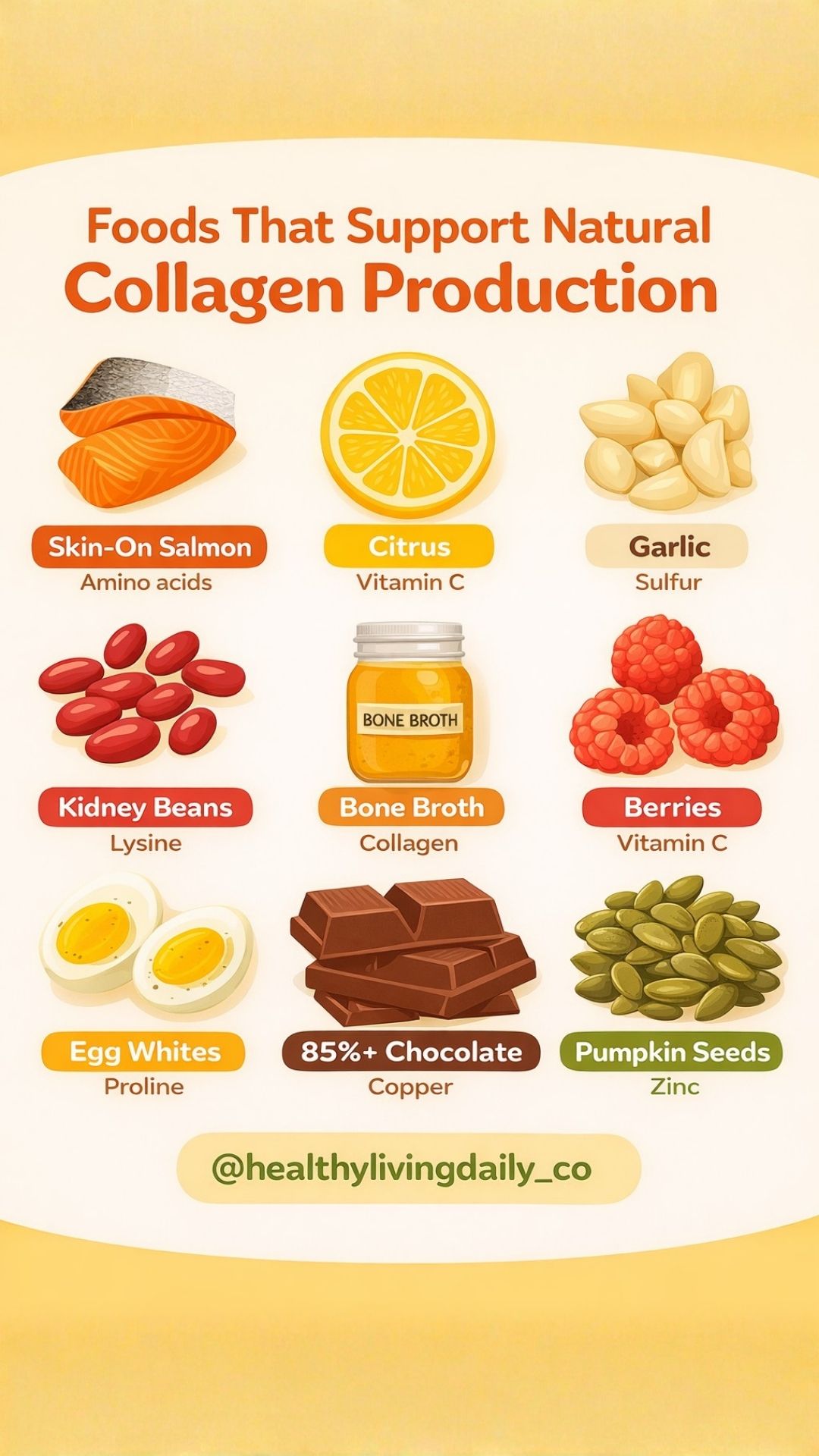
The Top 9 Foods for Natural Collagen Production
1. Skin-On Salmon (The Amino Acid Powerhouse)
While many people opt for skinless fillets, the skin of the salmon is where the magic happens. It contains high concentrations of Type I collagen and is packed with glycine and proline.
- Pro Tip: Try air-frying your salmon skin-side up at 400°F for 10 minutes to get that “bacon-like” crunch that is both delicious and functional for your skin.
2. Citrus Fruits (The Vitamin C Catalyst)
Vitamin C is the essential “on-switch” for pro-collagen production. Without it, the body cannot link amino acids together to form the triple-helix structure of collagen.
- Best Sources: Oranges, lemons, and limes. A squeeze of fresh lemon in your morning water is a simple, effective habit for cellular health.
3. Garlic (The Sulfur Secret)
Garlic is rich in sulfur, a trace mineral that helps synthesize collagen and prevents its breakdown. It also contains lipoic acid and taurine, which help rebuild collagen fibers that have been damaged over time.
- Kitchen Hack: Crush your garlic and let it sit for 10 minutes before cooking to activate its beneficial compounds.
4. Kidney Beans (The Plant-Based Protein)
For those following a vegan or vegetarian lifestyle, kidney beans are an excellent source of lysine. This amino acid is critical for tissue repair and the cross-linking of collagen fibers.
- Nutrient Boost: Pair beans with citrus-based dressings to enhance the absorption of non-heme iron and support overall skin vitality.
5. Bone Broth (The Direct Source)
Bone broth is one of the few foods that actually provides bioavailable collagen. By simmering animal bones for 12–24 hours, you extract the collagen, gelatin, and minerals directly into a drinkable liquid.
- Quality Matters: Always look for “Grass-Fed” or “Organic” labels when buying store-bought broth to avoid inflammatory additives.
6. Berries (Antioxidants + UV Protection)
Raspberries, blueberries, and strawberries are loaded with ellagic acid. This antioxidant helps prevent collagen breakdown caused by UV rays (sun damage).
- Daily Goal: Add a handful of berries to your morning Greek yogurt to fight “inflammaging” from the inside out.
7. Egg Whites (The Proline Provider)
While the yolk contains healthy fats, the whites are pure protein and exceptionally high in proline. This specific amino acid is a fundamental building block for the collagen that keeps skin firm.
- American Classic: A simple three-egg white omelet with spinach is a powerhouse breakfast for your skin’s structural health.
8. 85%+ Dark Chocolate (The Copper Connection)
Copper is often the “forgotten” mineral in skincare, but it’s vital for the enzyme lysyl oxidase, which stabilizes collagen fibers. High-quality dark chocolate (85% cocoa or higher) is a rich source of copper.
- Warning: Stick to 85%+ to avoid high sugar levels. Sugar leads to Glycation, a process where sugar molecules attach to collagen and make it brittle and prone to breaking.
9. Pumpkin Seeds (The Zinc Factor)
Zinc is a co-factor for collagen production and acts as a “skin healer.” Pumpkin seeds (pepitas) are one of the most concentrated plant sources of zinc.
- On-the-go: Keep a small bag of roasted pumpkin seeds in your car or desk for a skin-boosting snack that keeps you full between meals.
Lifestyle Factors: Protect What You Build
Eating the right foods is only half the battle. To maintain a youthful glow, you must also stop the “collagen thieves”:
- Sun Exposure: Wear SPF daily. UV rays are the #1 cause of collagen degradation.
- Sugar Intake: High sugar levels create Advanced Glycation End-products (AGEs), which literally shatter your collagen.
- Sleep: Your body repairs and synthesizes protein while you sleep. Aim for 7–9 hours.
The Bottom Line
A collagen-rich diet isn’t about eating one “superfood”; it’s about a consistent symphony of amino acids, minerals, and vitamins. By prioritizing the nine foods listed above, you are giving your body the tools it needs to maintain its strength, elasticity, and glow for years to come.