Do you find yourself struggling to chug the recommended eight glasses of water a day? You aren’t alone. For many Americans, maintaining optimal hydration feels like a chore, often leading to mid-afternoon fatigue, persistent brain fog, and lackluster skin.
But here is the secret that top nutritionists want you to know: you don’t have to get all your fluids from a bottle. In fact, research shows that about 20% of our daily water intake comes from the foods we eat. By adopting an “Eat Your Water” strategy, you can fuel your body with essential vitamins and minerals while staying perfectly hydrated.
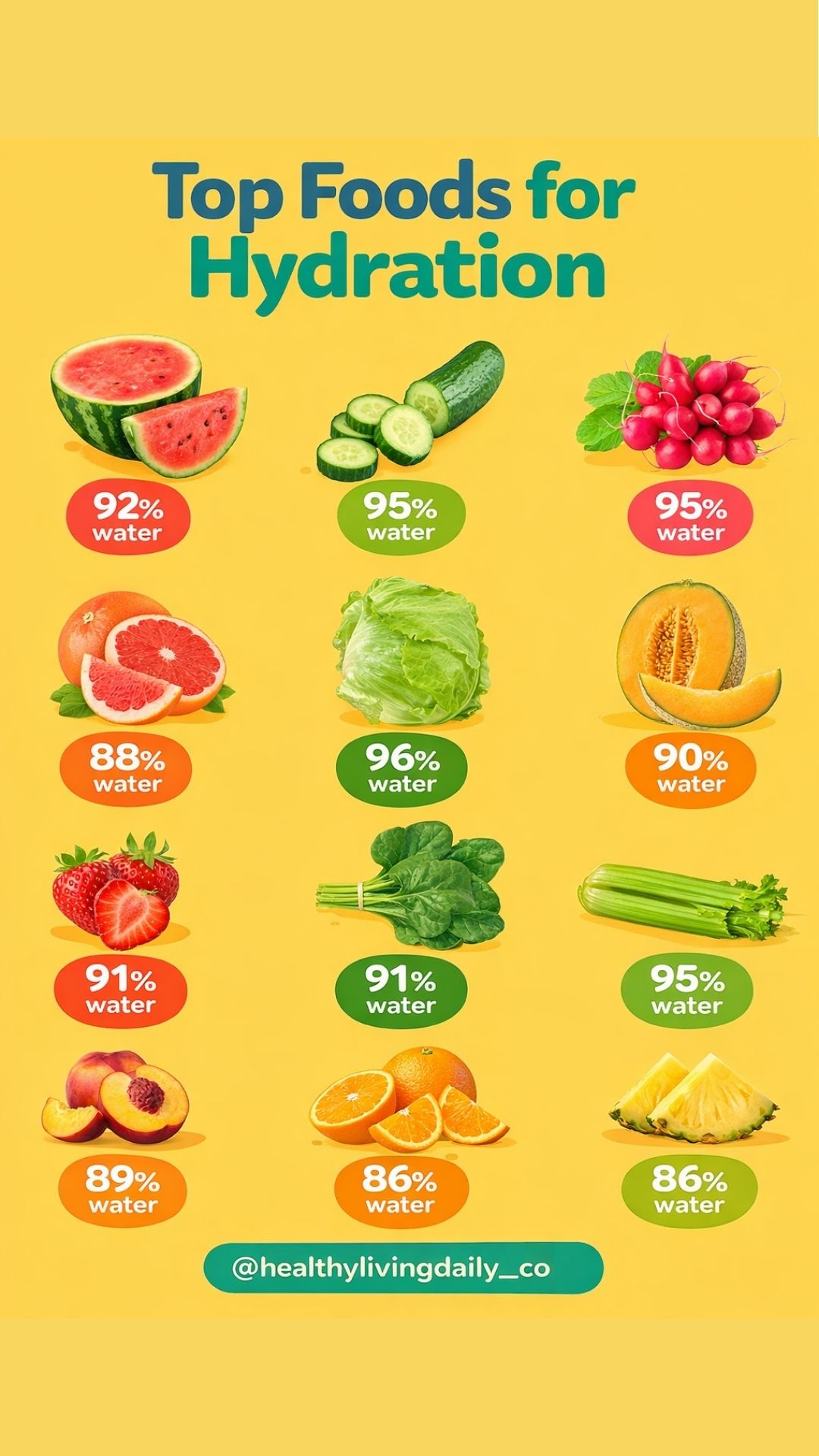
In this guide, we break down the top 12 powerhouse foods with the highest water content to help you stay cool and energized throughout 2026.
The “Super Hydrators” (95% – 96% Water Content)
When you need maximum hydration with minimal calories, these garden-fresh staples are your best friends.
1. Iceberg Lettuce (96% Water)
Often underrated, iceberg lettuce is the undisputed king of hydration. While darker greens offer more fiber, iceberg is a hydration hero. It’s the perfect base for high-volume salads that keep you full and fluid-balanced without the heavy calorie count.
2. Cucumbers (95% Water)
Cucumbers are practically solid water. Beyond their crunch, they contain caffeic acid, which helps soothe skin irritation and reduce swelling.
- Pro Tip: Add cucumber slices to your water pitcher for a “spa water” experience that encourages you to drink more.
3. Radishes (95% Water)
These peppery root vegetables are a surprising hydration source. Radishes are packed with antioxidants and sulfur compounds that aid digestion. Their high water content makes them incredibly cooling on a hot summer afternoon.
4. Celery (95% Water)
Forget the “negative calorie” myth—celery is a nutritional powerhouse. It is naturally rich in potassium and sodium, the two primary electrolytes required for proper fluid balance at a cellular level.
The Sweet Hydrators (90% – 92% Water Content)
These fruits and greens offer a delicious way to satisfy your sweet tooth while flooding your system with H2O.
5. Watermelon (92% Water)
Watermelon is the quintessential American summer fruit for a reason. It contains L-citrulline, an amino acid that may reduce muscle soreness after a workout. It’s the ultimate post-run snack for fitness enthusiasts.
6. Strawberries (91% Water)
Packed with more Vitamin C per serving than some citrus fruits, strawberries provide hydration alongside a massive antioxidant boost. The fiber in berries ensures that the natural sugars are absorbed slowly, preventing energy crashes.
7. Spinach (91% Water)
While famous for its iron content, spinach is also a hydration heavyweight. Eating spinach raw in smoothies or salads ensures you get the most water content, as cooking it causes the leaves to lose their fluid structure.
8. Cantaloupe (90% Water)
Rich in Vitamin A (beta-carotene), cantaloupe supports vision and immune health. Just one cup provides over 100% of your daily recommended intake of Vitamin A while keeping your hydration levels steady.
The Nutrient-Dense Boosters (86% – 89% Water Content)
These foods may have slightly less water, but they more than make up for it with their dense profile of phytonutrients.
9. Peaches (89% Water)
Peaches are excellent for skin health. Their combination of water and Vitamin C helps maintain skin elasticity and prevents the drying effects of the sun.
10. Grapefruit (88% Water)
Grapefruit is known for its metabolism-boosting properties. Research suggests that the chemical properties in grapefruit can reduce insulin levels, helping your body process energy more efficiently while keeping you hydrated.
11. Oranges (86% Water)
The classic American breakfast staple. Oranges provide a “double win” of hydration and Vitamin C, which is essential for collagen production and immune defense during seasonal changes.
12. Pineapple (86% Water)
Pineapple contains bromelain, an enzyme that helps fight inflammation and aids digestion. It’s a tropical way to hydrate while supporting your gut health.
The Science: Why “Eating Your Water” is Better
Traditional hydration is about volume, but “eating your water” is about bioavailability. Here is why it works:
- Slow Release: The fiber in fruits and vegetables acts like a sponge, releasing water slowly into your bloodstream. This prevents the “flash-flood” effect where your body simply flushes out excess plain water.
- Natural Electrolytes: These foods aren’t just water; they are mineral-rich. Potassium, magnesium, and calcium found in these plants help water actually enter your cells rather than just sitting in your digestive tract.
- Synergistic Nutrition: You are getting a package deal. When you eat an orange, you aren’t just getting water; you’re getting the antioxidants that protect your cells from the oxidative stress caused by dehydration.
Actionable Tips: How to Hydrate Like a Pro
- Morning Smoothie: Blend spinach, strawberries, and a splash of coconut water for a hydration bomb to start your day.
- The “Crunch” Snack: Swap processed crackers for sliced cucumbers and radishes dipped in hummus.
- The Salad Strategy: Always start your dinner with a high-water-content salad (Iceberg or Spinach) to pre-hydrate your digestive system.
- Frozen Treats: Freeze watermelon chunks or pineapple rings for a healthy, hydrating alternative to sugary popsicles.
Conclusion
Hydration isn’t just about the gallon jug sitting on your desk; it’s about the quality of the fuel you put on your plate. By incorporating these 12 powerhouse foods into your daily routine, you can improve your energy, clarify your skin, and feel your best throughout 2026.
Remember, your body is over 60% water. Treat it with the nutrient-dense hydration it deserves.
FAQ: Your Hydration Questions Answered
Can I stay hydrated just by eating food?
While eating water-rich foods is a powerful tool, it should supplement—not replace—your water intake. Aim for a balance of both to ensure your kidneys and metabolic processes function optimally.
What vegetable has the most water?
Lettuce and cucumbers are the winners, both hovering around 95-96% water content.
Is the sugar in hydrating fruits bad for me?
No. Unlike “added sugars” in soda, the natural sugars in fruit come bound with fiber. This means your body processes the sugar slowly, providing steady energy without the spikes and crashes associated with processed snacks.