We often hear that collagen is the “fountain of youth,” and for good reason. As the most abundant protein in the human body, it acts as the structural “glue” that keeps our skin firm, our joints supple, and our hair resilient. However, by the time we hit our 30s, our natural production begins to dip by about 1% every year.
In the United States, lifestyle factors like high sugar intake, chronic stress, and UV exposure from outdoor activities further accelerate this decline. While the market is flooded with expensive powders and serums, the most sustainable way to support your body’s architecture is through the nutrients on your plate.
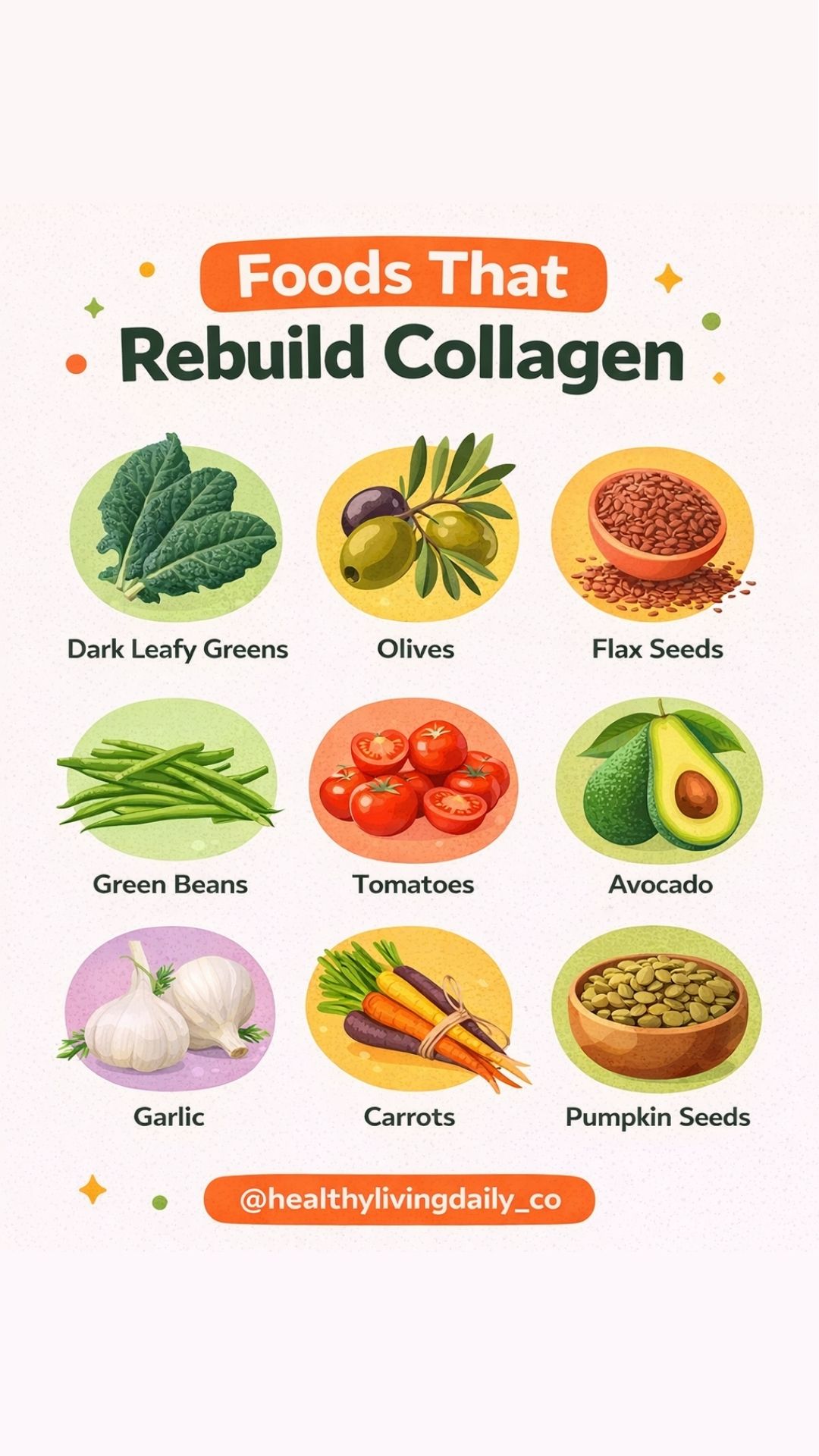
If you are looking to restore your skin’s elasticity and glow, here are the nine powerhouse foods that scientifically help your body rebuild collagen from the inside out.
The Science of Synthesis: How Your Body Makes Collagen
To build collagen, your body doesn’t just “absorb” the protein you eat. Instead, it breaks down protein into amino acids (like glycine and proline) and uses specific co-factors to “weave” them into new fibers. Without Vitamin C, Zinc, and Copper, your body cannot effectively produce collagen, no matter how much supplement powder you take.
9 Powerhouse Foods to Rebuild Your Collagen
1. Dark Leafy Greens (The Chlorophyll Connection)
Kale, spinach, and Swiss chard are more than just superfoods; they are collagen precursors. They contain chlorophyll, the pigment that gives plants their green color. Studies suggest that chlorophyll increases the precursor to collagen (procollagen) in the skin.
- Pro-Tip: Sauté your greens with a bit of lemon juice; the Vitamin C in the lemon helps you absorb the plant-based iron and boosts collagen synthesis simultaneously.
2. Olives (The Sulfur Source)
Whether you prefer Kalamata or green Manzanilla, olives are rich in sulfur and Vitamin E. Sulfur is a trace mineral that helps form collagen and prevent its breakdown. It also supports skin pigmentation, helping to keep your complexion even and vibrant.
3. Flax Seeds (The Inflammatory Shield)
Chronic inflammation is a leading cause of collagen degradation. Flax seeds are one of the best plant-based sources of Omega-3 fatty acids (ALA). These healthy fats strengthen the skin’s lipid barrier, keeping moisture in and environmental toxins out.
4. Green Beans (The Structural Stabilizer)
Often overlooked, green beans contain Silicon, a mineral essential for bone health and the stabilization of collagen fibers. By strengthening these fibers, green beans help maintain the “bounce” in your skin and the resilience in your connective tissues.
5. Tomatoes (The Lycopene Guard)
Tomatoes are a dual-threat for aging. They are packed with Vitamin C (the primary requirement for collagen production) and Lycopene, a powerful antioxidant that protects the skin from oxidation and UV damage.
- Expert Insight: Cooking tomatoes actually increases the bioavailability of lycopene, making tomato sauce or roasted tomatoes a skin-health powerhouse.
6. Avocado (The Regenerative Fruit)
Avocados provide high levels of Vitamin E, which works synergistically with Vitamin C to protect existing collagen from free radical damage. The healthy monounsaturated fats in avocados also support skin cell regeneration, keeping the dermis thick and healthy.
7. Garlic (The Rebuilding Agent)
Garlic is high in sulfur, which is a trace mineral that helps synthesize and prevent the breakdown of collagen. It also contains lipoic acid and taurine, which help rebuild collagen fibers that have been damaged over time.
8. Carrots (The Internal Retinol)
Carrots are famous for Beta-carotene, which the body converts into Vitamin A. In the skincare world, Vitamin A is the gold standard (Retinol) for stimulating collagen production and increasing cell turnover. Eating carrots provides a natural, systemic boost to this process.
9. Pumpkin Seeds (The Zinc Factor)
If you want to heal your skin, you need Zinc. Pumpkin seeds are one of the best plant-based sources of this mineral. Zinc acts as an essential co-factor for collagen synthesis and plays a vital role in wound healing and DNA repair.
Putting It Into Practice: The “Collagen-Boost” Bowl
You don’t need complex recipes to see results. Try this simple Radiant Skin Bowl for lunch:
- Base: Massaged kale and spinach.
- Protein/Healthy Fats: Sliced avocado and a handful of pumpkin seeds.
- Topping: Roasted tomatoes and sliced olives.
- Dressing: Olive oil, fresh lemon juice, and minced garlic.
- Texture: Sprinkle with ground flax seeds for an extra Omega-3 punch.
Beyond Diet: Protecting Your Progress
Eating the right foods is only half the battle. To keep your collagen levels high, you must avoid “collagen killers”:
- Wear SPF Daily: Even on cloudy days in the US, UV rays penetrate the skin and shatter collagen fibers.
- Watch the Sugar: Sugar causes a process called Glycation, where sugar molecules attach to collagen, making it brittle and prone to breaking.
- Stay Hydrated: Collagen fibers thrive in a hydrated environment. Aim for at least 8-10 glasses of water a day.
Your Journey to Resilient Skin Starts Today
Rebuilding collagen is a marathon, not a sprint. By incorporating these nine whole foods into your daily routine, you are providing your body with the biological tools it needs to repair, protect, and thrive.
Ready to transform your skin from the inside out? 👉 [Download our Free 7-Day “Glowing Skin” Meal Plan] to get started with delicious, collagen-boosting recipes designed for your busy lifestyle.
Have a favorite recipe using these ingredients? Drop a comment below and join our community of health-conscious readers!