Have you ever spent a small fortune on high-end shampoos and “miracle” serums, only to find your hair looking just as dull as before? While topical treatments have their place, the secret to a luscious mane doesn’t live in your bathroom cabinet—it lives in your kitchen.
Hair is the fastest-growing tissue in the human body, but because it’s not a “vital” organ, your body often diverts nutrients elsewhere if you’re running low. To achieve the thickness and shine you desire, you must adopt an “inside-out” approach. This guide explores the essential superfoods you need to fuel your scalp and accelerate your hair growth cycle naturally.
The Science of Strands: Why Nutrition Matters
Slow hair growth and thinning are often symptoms of deeper issues: chronic stress, genetics, or environmental damage. However, the most common (and fixable) culprit is a nutritional deficiency. Your hair follicles require a steady supply of specific vitamins—like A, C, E, and Biotin—alongside minerals like Zinc and Iron to produce healthy keratin. Without these building blocks, strands become brittle, growth stalls, and shedding increases.
1. The Root of Growth: Vitamin-Rich Vegetables
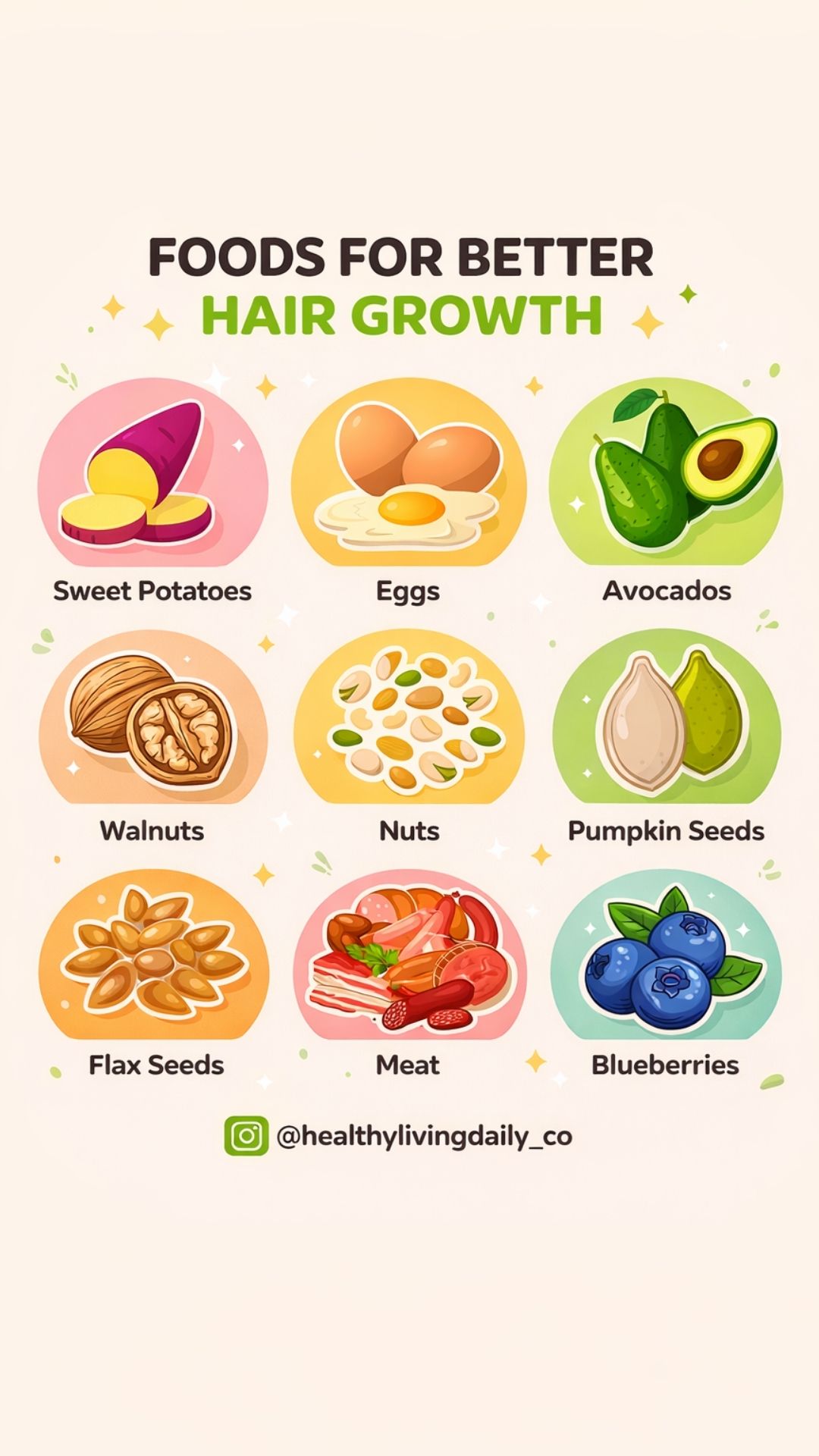
Sweet Potatoes: The Beta-Carotene Powerhouse
Sweet potatoes are more than just a Thanksgiving staple; they are a primary source of beta-carotene. Your body converts this compound into Vitamin A, which is linked to hair health in two major ways:
- Sebum Production: Vitamin A helps skin glands make an oily substance called sebum. Sebum moisturizes the scalp and keeps hair from drying out.
- Cell Regeneration: It encourages the rate of hair growth and the growth of thicker hair, all while preventing other hair follicles from regressing.
2. Protein: The Essential Building Blocks
Your hair is primarily made of a protein called keratin. If you aren’t consuming enough protein, your body may prioritize other functions, leading to “resting phase” hair loss.
Eggs: Biotin and Beyond
Eggs are a “gold medal” food for hair. They provide two key components:
- Biotin: Also known as Vitamin B7, Biotin is essential for the production of keratin. While Biotin deficiencies are rare in the US, increasing your intake can significantly improve hair texture.
- L-lysine and Vitamin D: Eggs also contain amino acids and minerals like zinc and selenium that support a healthy growth cycle.
Meat: The Iron Essential
Lean meats—such as grass-fed beef or organic chicken—are packed with bioavailable iron. Iron helps red blood cells deliver oxygen to all your cells, including your hair follicles. A lack of iron (anemia) is a leading cause of hair loss, particularly in women.
Pro Tip: Pair your iron-rich meats with Vitamin C (like a squeeze of lemon) to maximize absorption.
3. Healthy Fats for Scalp Vitality
Avocados: Vitamin E and Omega Fatty Acids
In the US, avocados are a beloved superfood, and for good reason. They are rich in Vitamin E, a potent antioxidant that combats oxidative stress. Oxidative stress on the scalp has been linked to poor hair quality and fewer follicles. Vitamin E protects the scalp area from damage while healthy fats add that “commercial-ready” shine to your strands.
Walnuts and Mixed Nuts
Nuts provide a wide array of B vitamins, zinc, and essential fatty acids. Walnuts, in particular, contain alpha-linolenic acid (an omega-3 fatty acid) which helps condition your hair naturally.
4. Small Seeds, Big Results
Pumpkin Seeds and Flax Seeds
Don’t let their size fool you. Pumpkin seeds are one of the best plant-based sources of Zinc. Zinc plays a crucial role in hair tissue growth and repair. It also keeps the oil glands around the follicles working properly. Flax seeds provide a massive boost of Omega-3s, which nourish the hair shaft and reduce inflammation that can lead to thinning.
5. Antioxidant Protection
Blueberries: The Vitamin C Shield
Blueberries are often called “brain berries,” but they are just as good for your scalp. They are bursting with Vitamin C, which serves two purposes:
- Collagen Synthesis: Vitamin C is required for the body to produce collagen, the protein that strengthens the hair to prevent it from breaking.
- Follicle Protection: Its antioxidant properties protect the delicate hair follicles from free radical damage caused by pollution and UV rays.
Revitalize Your Routine Today
Struggling to track your nutrients? Download our free 2026 Hair Healthy Grocery List & Meal Prep Guide to start your journey toward stronger hair today! [Download the Guide Now]
How to Build a Hair-Growth Meal Plan
Incorporating these foods doesn’t have to be complicated. Here is a simple daily blueprint:
- Breakfast: Smashed avocado on whole-grain toast topped with a poached egg and a sprinkle of flax seeds.
- Lunch: A vibrant salad with grilled chicken (meat), roasted sweet potatoes, and a handful of walnuts.
- Snack: A bowl of fresh blueberries.
- Dinner: Broiled salmon or lean steak with a side of sautéed greens and pumpkin seeds.
Beyond the Plate: Lifestyle Habits
While diet is 80% of the battle, these habits can help you cross the finish line:
- Scalp Circulation: Give yourself a 5-minute scalp massage daily to increase blood flow to the follicles.
- Hydration: Hair is roughly 25% water. Dehydration can instantly stall growth and leave hair looking straw-like.
- Stress Management: High cortisol levels can push hair into a premature shedding phase. Consider yoga or meditation to keep your hormones in check.
Conclusion
Patience is the most important ingredient in any hair growth journey. Because of the natural hair growth cycle, it typically takes 3 to 6 months of consistent nutritional changes to see visible results in thickness and length. Start by incorporating at least three of the superfoods mentioned above into your weekly routine, and watch your hair transform from the inside out.
Ready to take the next step? Sign up for our “Inside-Out Beauty” newsletter for weekly recipes and expert tips delivered straight to your inbox!
FAQ: Common Questions About Hair Nutrition
1. How long does it take for diet changes to affect hair growth? Since hair only grows about half an inch per month, you will likely notice improvements in scalp health first, followed by hair strength and length in about 90 to 180 days.
2. Can a lack of protein cause hair loss? Yes. Since hair is made of protein, a significant deficiency can cause the body to ration protein, leading to hair thinning or brittle strands.
3. What is the single best food for hair growth? While a balanced diet is best, Eggs are often cited as the top food due to their perfect combination of protein and Biotin.
Medical Disclaimer: This content is for informational purposes only and does not constitute medical advice. Always consult with a healthcare professional or registered dietitian before making significant changes to your diet or starting new supplements.