Walking down the produce aisle at a US grocery store today can feel like a financial minefield. With the rising cost of living, many American families find themselves stuck in a dilemma: pay the “organic premium” to avoid pesticides, or settle for conventional produce and worry about chemical residues.
The good news? You don’t have to buy everything organic to protect your health.
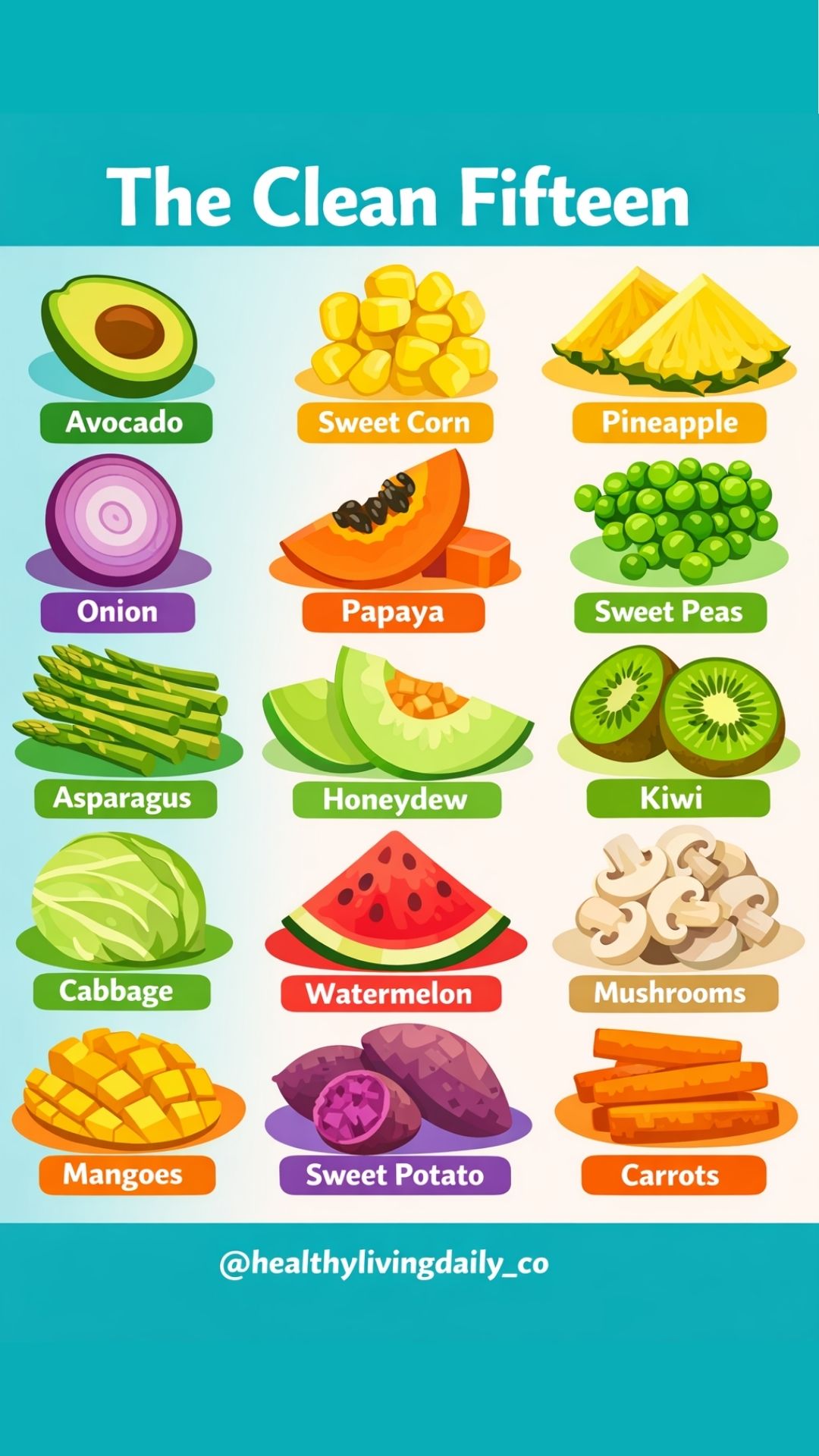
Based on the latest data from the Environmental Working Group (EWG) and USDA testing, the Clean Fifteen list identifies conventional produce with the lowest pesticide loads. By strategically choosing these items, you can drastically reduce your chemical exposure while keeping your grocery bill manageable.
What Exactly is the “Clean Fifteen”?
Every year, the EWG analyzes Department of Agriculture data to rank fruits and vegetables based on pesticide contamination. The “Clean Fifteen” represents the top performers—the produce least likely to contain detectable residues.
How do these items stay so clean? Nature often provides its own defense. Many fruits and vegetables on this list have thick outer skins or husks that act as a natural barrier. Others have biological mechanisms that make them less attractive to pests, requiring fewer chemical interventions during the growing process.
Deep Dive: The Cleanest Produce You’ll Find in 2026
If you’re looking to optimize your shopping list, focus on these 15 powerhouses. They offer the best “bang for your buck” when buying conventional.
The Heavy Hitters: Avocados & Sweet Corn
These two consistently top the charts.
- Avocados: Thanks to that thick, pebbly skin (often called “alligator pear” skin), the creamy fruit inside remains untouched by surface sprays. Less than 2% of conventional avocados show any detectable pesticides.
- Sweet Corn: The heavy husk and silk layers provide a formidable shield. While the crop itself is clean of residues, shoppers should check for non-GMO labels if that is a personal priority (see the GMO section below).
The Hardy Staples: Onions, Carrots, & Sweet Potatoes
Root vegetables and bulbs are often safer bets because they grow underground or have protective outer layers.
- Onions: Their pungent nature naturally deters many pests, and the outer papery skin is discarded before eating.
- Sweet Potatoes & Carrots: These nutrient-dense staples are resilient. Modern American farming techniques for these crops have resulted in significantly lower residue levels compared to leafy greens.
The Tropical Bounty: Pineapple, Papaya, Mangoes, & Watermelon
Craving a taste of the tropics? You’re in luck.
- Pineapple & Watermelon: The massive, thick rinds on these fruits are nearly impenetrable to most common agricultural sprays.
- Papaya & Mangoes: These fruits are not only high in Vitamin C but also rank among the cleanest due to their protective skins.
Low-Residue Greens & More: Cabbage, Asparagus, Mushrooms, & Sweet Peas
- Cabbage: Since the outer leaves are usually removed before it hits the shelf, the tight inner head remains protected.
- Asparagus: This crop produces an enzyme that helps break down certain pesticides, making it one of the “cleanest” stalks in the produce section.
- Mushrooms & Sweet Peas: These are grown in controlled environments or pods that naturally minimize the need for heavy chemical use.
Sweet & Safe: Honeydew & Kiwi
Kiwi’s fuzzy skin and Honeydew’s waxy rind do an excellent job of keeping the fruit inside pristine. Both are excellent sources of fiber and potassium without the organic price tag.
The GMO Caveat: What US Shoppers Need to Know
While the items above are low in pesticides, two specific crops—Sweet Corn and Papaya—are frequently grown from genetically modified (GE) seeds in the United States.
If your health goals include avoiding GMOs, we recommend looking for the USDA Organic seal or the Non-GMO Project Verified label specifically for corn and papaya, even though they are on the “Clean” list for pesticides.
A Smarter Shopping Strategy: The Hybrid Approach
You don’t need to go 100% organic to see health benefits. Instead, try the “Hybrid Method”:
- Save on the Clean Fifteen: Buy these conventionally at your local Walmart, Kroger, or Trader Joe’s.
- Splurge on the “Dirty Dozen”: Use the money you saved to buy organic versions of high-risk items like strawberries, spinach, and kale.
Pro Tip: Buying seasonal and local at Farmers’ Markets is often the best way to get high-quality produce that hasn’t traveled thousands of miles—further reducing the need for preservatives.
Practical Tips for Your Kitchen
Regardless of whether you buy organic or conventional, proper handling is key:
- The Baking Soda Soak: Research suggests soaking produce in a mixture of water and baking soda for 12–15 minutes is more effective at removing surface residues than plain water.
- Store Smarter: Keep your onions in a cool, dark place and your avocados on the counter until ripe to maximize their nutritional shelf life.
Ready to transform your health and your budget?
[Download our Free Printable 2026 Clean Fifteen & Dirty Dozen Pocket Guide] to keep in your wallet for your next grocery run!
[Join the Healthy Living Daily Newsletter] for weekly tips on budget-friendly wellness, seasonal recipes, and science-backed nutrition advice delivered straight to your inbox.
Frequently Asked Questions (FAQ)
Is the Clean Fifteen updated every year? Yes. The EWG releases an updated report annually based on the most recent USDA testing data to ensure consumers have the most accurate information.
Do I still need to wash Clean Fifteen vegetables? Absolutely. While pesticide levels are low, washing helps remove dirt, bacteria, and any wax coatings applied for transport.
Why are avocados considered so clean? Their thick, inedible skin prevents pesticides from reaching the fruit. Additionally, they are not a crop that typically requires heavy spraying compared to thin-skinned fruits.
Are mushrooms on the Clean Fifteen list? Yes. Conventional mushrooms are consistently found to have very low to no detectable pesticide residues, making them a safe and affordable choice.