Do you ever feel “wired but tired”? You’ve had a long, exhausting day, but as soon as your head hits the pillow, your mind starts racing. You’re physically spent, yet you’re staring at the ceiling at 2:00 AM.
If this sounds familiar, you aren’t just “stressed”—you likely have a nighttime cortisol problem. While cortisol is essential for getting us out of bed in the morning, having elevated levels at night is a recipe for insomnia.
Fortunately, you can hack your biology using “Nutritional Sleep Hygiene.” Here are the best bedtime foods to lower cortisol naturally and reclaim your rest.
Why High Nighttime Cortisol is Ruining Your Sleep
In a healthy body, cortisol follows a strict Circadian Rhythm. It should peak around 8:00 AM to give you energy and gradually taper off throughout the day, reaching its lowest point around midnight. This allows its counterpart, melatonin, to rise and usher you into deep, restorative sleep.
When this rhythm is disrupted—due to chronic stress, late-night screen time, or poor diet—cortisol stays high. The symptoms are unmistakable:
- An inability to fall asleep despite exhaustion.
- Waking up suddenly at 3:00 AM with a racing heart.
- Night sweats or intense vivid dreams.
- Feeling unrefreshed even after a full night’s rest.
By strategically choosing your evening snacks, you can signal your nervous system to shift from “fight or flight” to “rest and digest.”
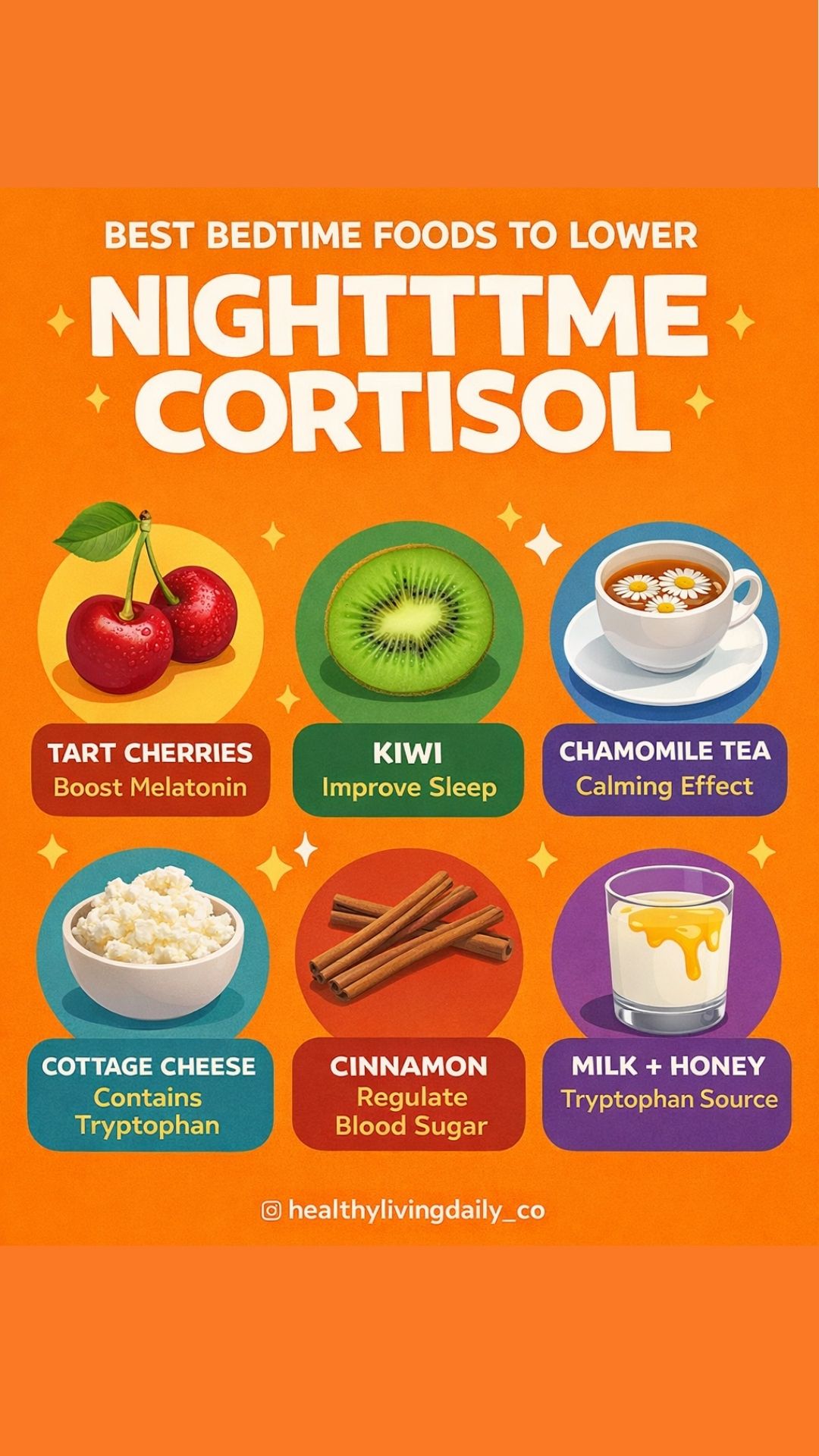
6 Powerhouse Foods to Lower Cortisol Before Bed
1. Tart Cherries: The Natural Melatonin Pump
Tart cherries, specifically the Montmorency variety, are one of the few natural food sources of melatonin. They are also packed with anti-inflammatory phytochemicals that reduce oxidative stress.
- The Benefit: Studies suggest that consuming tart cherry juice can increase sleep time and efficiency.
- Pro-Tip: If you’re on social media, you’ve likely seen the “Sleepy Girl Mocktail.” Mix pure tart cherry juice with a splash of magnesium powder and sparkling water for a powerful cortisol-lowering evening ritual.
2. Kiwi: The Serotonin Secret
Kiwi is a nutritional powerhouse for sleep. It’s high in antioxidants, Vitamin C, and most importantly, serotonin—the precursor to melatonin.
- The Benefit: Research shows that eating two kiwis an hour before bed can help you fall asleep significantly faster.
- Why it works: Serotonin helps regulate the sleep-wake cycle, providing a calming effect on the brain.
3. Chamomile Tea: The Ultimate Calming Ritual
Chamomile is much more than just a “warm drink.” It contains apigenin, an antioxidant that binds to specific receptors in the brain that promote sleepiness and reduce anxiety.
- The Benefit: It acts as a mild sedative, lowering the psychological “noise” that keeps cortisol levels elevated.
- Usage: Brew a strong cup 45 minutes before bed to allow the apigenin to take effect.
4. Cottage Cheese: Slow-Release Tryptophan
If you wake up hungry in the night, your cortisol might be spiking because of a drop in blood sugar. Cottage cheese is rich in casein protein, which digests slowly, providing a steady stream of amino acids throughout the night.
- The Benefit: It’s high in tryptophan, an amino acid that the body uses to produce serotonin and melatonin.
- The Advantage: The slow-digesting nature of cottage cheese prevents “midnight hunger pangs” that can wake you up.
5. Cinnamon: The Blood Sugar Regulator
Cinnamon is a secret weapon for hormonal balance. It is world-renowned for its ability to improve insulin sensitivity and stabilize blood glucose levels.
- The Benefit: When your blood sugar drops too low at night (hypoglycemia), your body releases cortisol to bring it back up. Cinnamon helps prevent these dramatic fluctuations.
- Usage: Sprinkle a teaspoon of Ceylon cinnamon over your cottage cheese or stir it into warm milk.
6. Milk + Honey: The Classic Tryptophan Source
There is a reason your grandmother recommended a glass of warm milk. Milk is a classic source of tryptophan, but adding a small amount of honey is the real “hack.”
- The Benefit: The natural glucose in honey causes a slight insulin rise, which helps the tryptophan cross the blood-brain barrier more effectively.
- The Result: A comforting, time-tested remedy that lowers cortisol by inducing a state of relaxation.
How to Build Your “Anti-Cortisol” Evening Routine
Eating the right foods is only half the battle. To truly lower cortisol, you must create a supportive environment:
- Timing: Aim to consume your sleep-inducing snack 30 to 60 minutes before your desired sleep time.
- Portion Control: Keep the snack light (around 150-200 calories). You want to satisfy hunger without making your digestive system work overtime.
- Low Light: Pair your snack with dimmed lights. Avoid blue light from smartphones, as this instantly triggers cortisol production.
Transform Your Sleep Tonight: Tired of feeling burnt out? [Download our Free 7-Day Hormone Balancing Meal Plan] to sync your diet with your body’s natural rhythms and start waking up refreshed.
Frequently Asked Questions (FAQs)
Q: Can I eat these foods every night? A: Yes! These are whole, nutrient-dense foods that can safely be incorporated into your daily routine. However, variety is key to overall gut health.
Q: What foods should I avoid to keep cortisol low? A: Avoid caffeine after 2:00 PM, high-sugar snacks (which cause insulin spikes and subsequent cortisol crashes), and alcohol, which may help you fall asleep but destroys sleep quality later in the night.
Q: How long does it take to see results? A: Some people feel the calming effects of chamomile or tart cherries immediately. However, for chronic high cortisol, it usually takes 7 to 14 days of consistent “nutritional sleep hygiene” to see a major shift in sleep quality.
Conclusion: Take Control of Your Hormones Tonight
High cortisol doesn’t have to be your “new normal.” By leveraging the power of tryptophan, melatonin, and blood sugar regulation, you can take control of your hormones right from your kitchen. Start tonight—swap the late-night scrolling for a bowl of cottage cheese with cinnamon or a warm cup of tart cherry juice. Your brain (and your nervous system) will thank you.