In the fast-paced modern world, finding a natural way to hit the “reset” button is more important than ever. While many reach for supplements, the secret to a resilient nervous system and deep, restorative sleep might already be in your kitchen.
Magnesium, often hailed as the “Master Mineral,” is responsible for over 300 biochemical reactions in the human body. Yet, data from the National Institutes of Health (NIH) suggests that nearly half of all Americans are not meeting their daily magnesium requirements. This “silent deficiency” can manifest as persistent fatigue, muscle cramps, and heightened anxiety.
By incorporating specific, nutrient-dense whole foods into your diet, you can naturally optimize your magnesium levels to support three vital pillars of health: Sleep quality, physical recovery, and nervous system calm.
Why Magnesium is Your Body’s Natural “Chill Pill”
Before diving into the list, it is essential to understand how this mineral functions within your biology:
1. Better Sleep Quality
Magnesium regulates neurotransmitters that send signals throughout the nervous system and brain. It helps activate the parasympathetic nervous system—the system responsible for helping you get calm and relaxed. It also regulates the hormone melatonin, which guides sleep-wake cycles in your body.
2. Enhanced Muscle Recovery & Performance
For fitness enthusiasts and athletes, magnesium is non-negotiable. It helps move blood sugar into your muscles and dispose of lactate, which can build up during exercise and cause fatigue. Proper levels prevent the dreaded “midnight leg cramps” and speed up tissue repair.
3. Calming the Nervous System
Magnesium acts as a gatekeeper for NMDA receptors, which are responsible for excitatory nerve signaling. By preventing these nerves from being overstimulated, magnesium helps reduce cortisol (the stress hormone) and promotes a sense of mental clarity and tranquility.
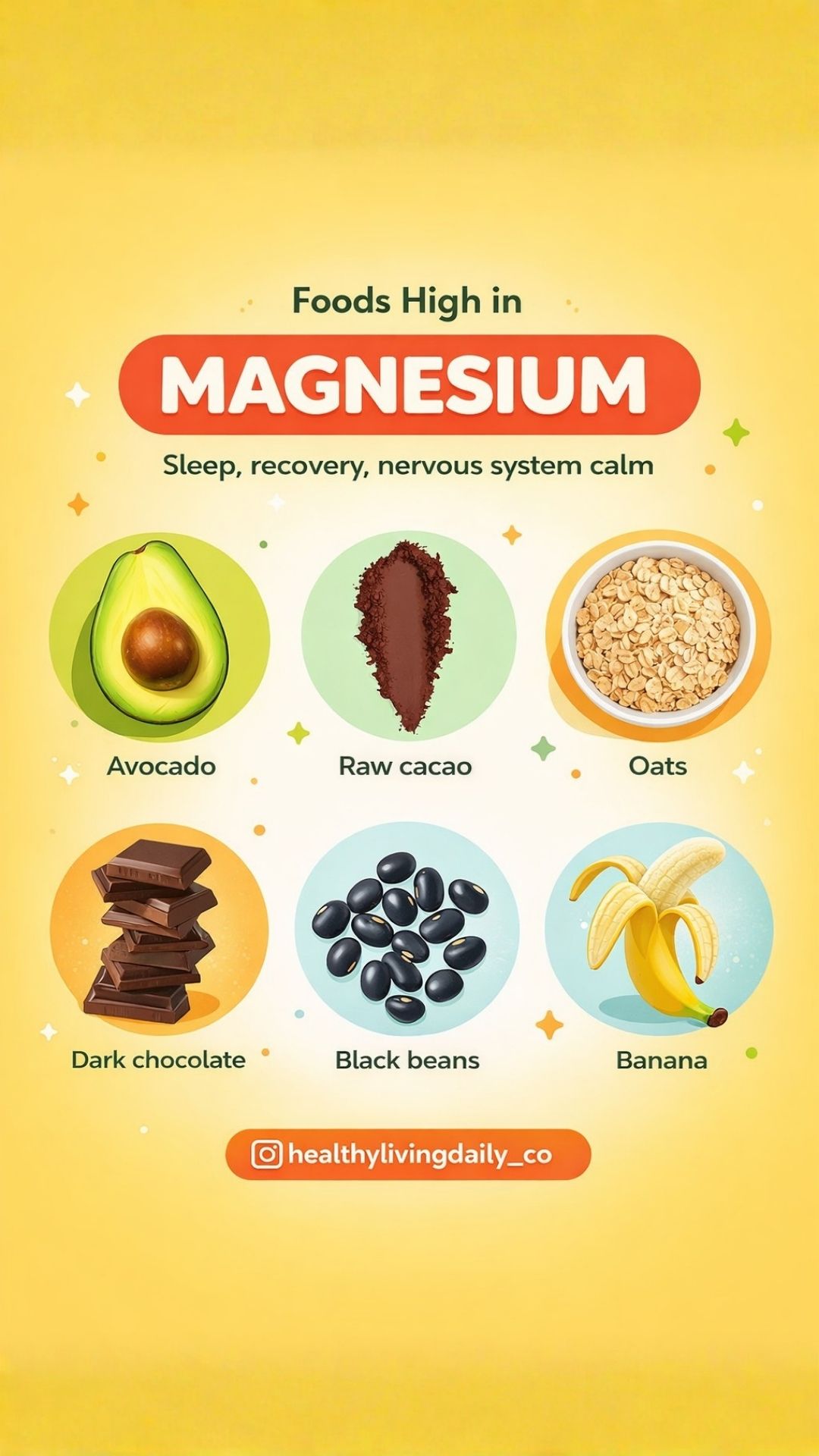
The Top 6 Magnesium-Rich Foods to Add to Your Grocery Cart
1. Avocado: The Creamy Superfood
One medium avocado provides approximately 58 mg of magnesium, which is 15% of the Daily Value (DV).
- The Wellness Edge: Beyond magnesium, avocados are packed with potassium, B-vitamins, and heart-healthy monounsaturated fats.
- How to Enjoy: It’s a staple for the classic American “Avocado Toast” topped with chili flakes, or blended into a morning smoothie for a silky texture without the dairy.
2. Raw Cacao: The Ultimate Antioxidant Boost
Raw cacao is one of the highest plant-based sources of magnesium available. Unlike standard cocoa powder, raw cacao is minimally processed, retaining its mineral density and powerful flavonoids.
- The Wellness Edge: Cacao promotes the release of phenylethylamine (the “love chemical”), which boosts mood along with your mineral intake.
- How to Enjoy: Stir a tablespoon of raw cacao nibs or powder into your overnight oats or Greek yogurt for a guilt-free energy boost.
3. Oats: The Heart-Healthy Breakfast Staple
A cup of cooked oatmeal can provide about 60 mg of magnesium. Oats are also an incredible source of beta-glucan, a type of soluble fiber that supports heart health and keeps you full longer.
- The Wellness Edge: The complex carbohydrates in oats help increase serotonin levels, further supporting the calming effect of the magnesium they contain.
- How to Enjoy: Prepare “Overnight Oats” with almond milk and chia seeds for a convenient, magnesium-packed grab-and-go breakfast.
4. Dark Chocolate: Your Healthiest Indulgence
Good news for chocolate lovers: dark chocolate is remarkably rich in magnesium, with 64 mg in a 1-ounce (28-gram) serving.
- The Wellness Edge: To maximize the benefits, always opt for dark chocolate containing at least 70% cacao solids. Anything lower often contains excess sugar which can actually deplete mineral stores.
- How to Enjoy: Savor a single square after dinner as a ritual to signal to your body that it is time to wind down for the evening.
5. Black Beans: Plant-Based Protein & Minerals
Legumes are magnesium heavyweights, and black beans lead the pack. One cup of boiled black beans contains an impressive 120 mg of magnesium.
- The Wellness Edge: They provide a “one-two punch” of fiber and protein, which stabilizes blood sugar—a critical factor in maintaining a calm nervous system throughout the day.
- How to Enjoy: Add them to a Southwest-style salad, mix them into a veggie burger, or use them as a base for a high-protein meal prep bowl.
6. Bananas: The Post-Workout Essential
While famous for potassium, one large banana also contains about 37 mg of magnesium.
- The Wellness Edge: The combination of potassium and magnesium makes bananas the perfect “portable” snack for preventing muscle soreness and replenishing electrolytes after a session at the gym.
- How to Enjoy: Keep them on hand for a quick pre-workout snack or slice them onto your peanut butter toast.
How to Maximize Your Magnesium Absorption
Eating these foods is the first step, but ensuring your body absorbs the mineral is just as important.
- Pair with Vitamin D and B6: These nutrients act as cofactors, helping magnesium enter your cells more efficiently.
- Watch the Phytates: Whole grains and legumes contain phytates, which can interfere with absorption. Soaking your beans or sprouting your grains can help neutralize this.
- Limit “Mineral Depleters”: Excessive caffeine, high-sugar diets, and phosphoric acid (found in dark sodas) can cause your kidneys to excrete magnesium more quickly.
Frequently Asked Questions (FAQs)
Q: How much magnesium do I need daily? The Recommended Dietary Allowance (RDA) for adults is generally 310–420 mg per day, depending on age and gender. Always consult with a healthcare provider for personalized advice.
Q: Can I get enough magnesium from food alone? For most healthy individuals, a diet rich in leafy greens, nuts, seeds, and the foods listed above is sufficient. However, those with high stress levels or intense athletic routines may require closer monitoring.
Q: What are the early signs of magnesium deficiency? Common early signs include muscle twitches, fatigue, loss of appetite, and difficulty staying asleep through the night.
Take Control of Your Recovery Today
Optimizing your health doesn’t always require a complex supplement cabinet. By leaning into whole, magnesium-dense foods like avocado, dark chocolate, and black beans, you are giving your body the raw materials it needs to repair, relax, and recharge.
Ready to transform your wellness routine? Don’t wait for the weekend to start feeling better. Save this list to your phone and commit to adding at least two of these powerhouse foods to your grocery cart this week. Your nervous system will thank you.
For more science-backed nutrition tips and healthy recipes, subscribe to our weekly wellness newsletter!