Waking up “under the weather” is a universal frustration. Whether it’s a tickle in your throat, a pounding headache from a fever, or a digestive system that refuses to cooperate, the first thing we often reach for is the medicine cabinet. However, nutritionists and health experts emphasize that your kitchen is often your first line of defense.
In this guide, we explore six science-backed foods that help soothe symptoms and accelerate recovery, ensuring you get back on your feet faster.
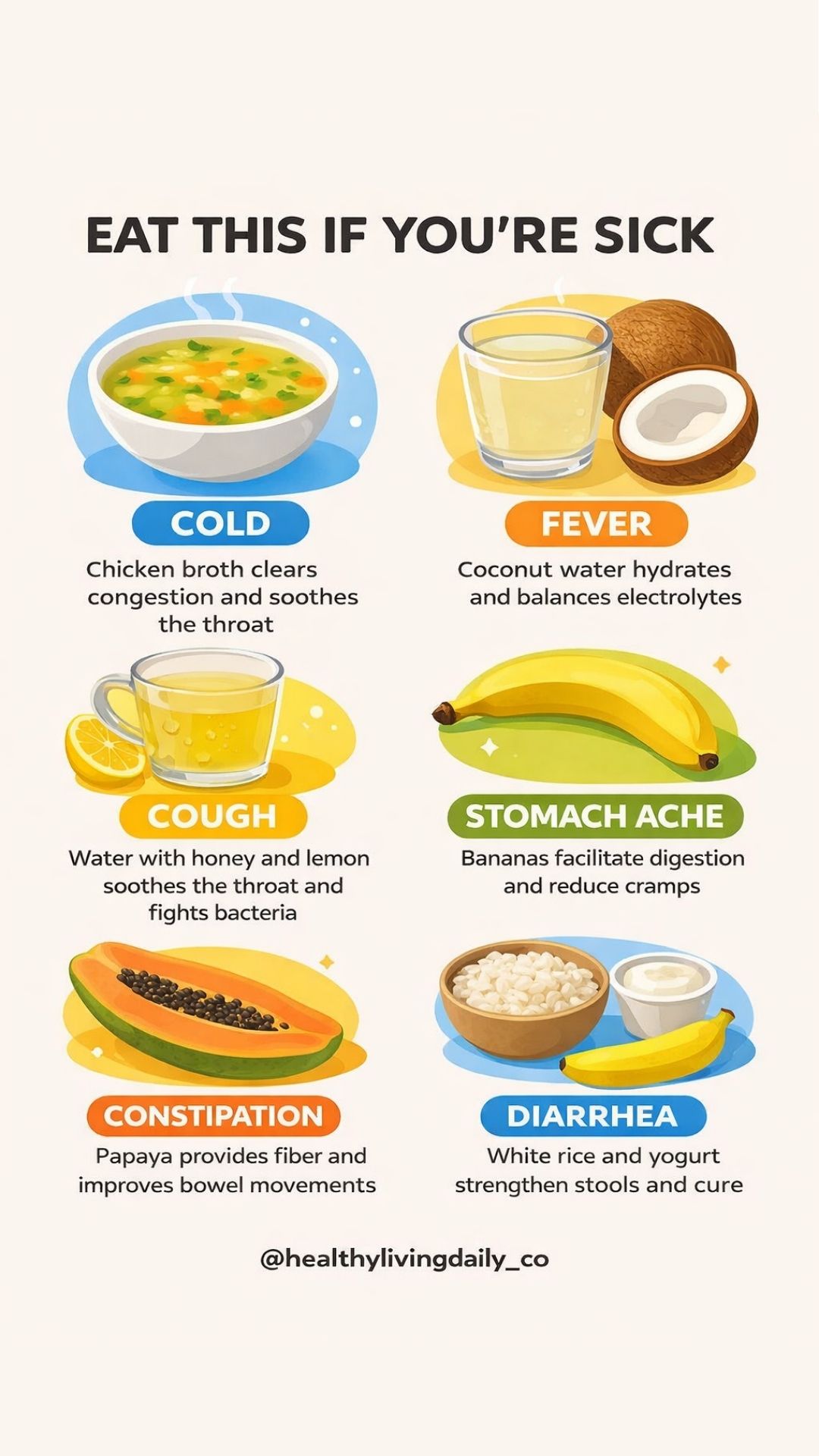
1. Fighting the Common Cold: The Power of Chicken Broth
There’s a reason chicken soup is often called “Jewish Penicillin” in American households. It’s more than just comfort food; it’s a functional remedy.
- Why it works: Warm chicken broth is rich in amino acids like cysteine, which mimics a common medication used for bronchitis. The heat helps move mucus, clearing nasal congestion effectively.
- Key Benefits: It provides essential hydration and the warmth provides immediate relief for a raw, scratchy throat.
- Expert Tip: For maximum benefit, choose a low-sodium bone broth. Bone broth contains collagen and minerals that support immune function and gut health during a cold.
2. Managing a Fever: Hydrate with Coconut Water
When your body temperature rises, you lose fluids and essential salts through sweat. Plain water is great, but it doesn’t always replace what’s lost.
- Why it works: Coconut water is nature’s “Gatorade.” It is naturally packed with electrolytes like potassium, sodium, and magnesium.
- Key Benefits: It hydrates the body more efficiently than water alone and helps maintain the electrical balance in your cells, which can alleviate the “fuzzy” feeling associated with fevers.
- The Healthier Choice: Unlike many commercial sports drinks, pure coconut water contains no artificial dyes or high-fructose corn syrup, making it easier on a sensitive system.
3. Soothing a Persistent Cough: Honey and Lemon Water
If a dry cough is keeping you up at night, skip the sugary syrups and try this classic duo.
- Why it works: Research suggests that honey can be as effective as some over-the-counter cough suppressants (like dextromethorphan). Lemon provides a boost of Vitamin C to support your immune system.
- Key Benefits: Honey acts as a demulcent, coating the irritated lining of the throat. The natural acidity of lemon helps break down mucus and has mild antibacterial properties.
- Safety Note: Never give honey to infants under 12 months old due to the risk of botulism. For adults, a spoonful of raw honey in warm water is the gold standard.
4. Calm Your Stomach Ache: The Banana Benefit
When your stomach is in knots, you need foods that are “non-stimulating” and easy for your GI tract to process.
- Why it works: Bananas are a staple of the BRAT diet (Bananas, Rice, Applesauce, Toast), which doctors traditionally recommend for upset stomachs.
- Key Benefits: They are rich in pectin, a soluble fiber that helps firm up stools, and potassium, which is vital for preventing the muscle cramps that often accompany stomach issues.
- Pro-Tip: Choose a banana that is slightly more yellow than green, as it will be easier to digest and higher in antioxidants.
5. Relieving Constipation: Fresh Papaya
Digestive backup can cause bloating and significant discomfort. Before reaching for a chemical laxative, look to the tropics.
- Why it works: Papaya contains a unique digestive enzyme called papain, which helps break down tough protein fibers.
- Key Benefits: Its high water and fiber content help move waste through the colon, improving bowel movements naturally.
- Suggestion: For the best results, consume a bowl of fresh papaya on an empty stomach in the morning to “jumpstart” your digestive system.
6. Handling Diarrhea: White Rice and Yogurt
When dealing with diarrhea, the goal is two-fold: firm up the stool and restore the gut’s “good” bacteria.
- The Binding Agent: White rice is low in fiber and helps add bulk to your stool without overworking your digestive system.
- The Probiotic Powerhouse: Yogurt (specifically Greek yogurt with “live and active cultures”) introduces beneficial bacteria back into your microbiome.
- The Result: This combination reduces the duration of the illness and helps re-stabilize your gut health after the infection has passed.
Helpful Tips for a Speedy Recovery
- Hydration First: Even if you aren’t hungry, keep sipping fluids. Dehydration is the primary reason for hospital visits during common illnesses.
- Small, Frequent Meals: Don’t force a full dinner. Eating small portions every few hours keeps your energy levels stable without stressing your stomach.
- Rest is Non-Negotiable: Your body uses energy to digest food and more energy to fight infection. Give it the sleep it needs to prioritize healing.
When to See a Professional
While these foods are powerful aids, they are not substitutes for medical care. Consult a healthcare provider if you experience:
- A fever above 103°F or one that lasts more than 3 days.
- Signs of severe dehydration (dark urine, dizziness).
- Inability to keep any liquids down.
- Severe abdominal or chest pain.
Stay Prepared for the Next “Sick Day”
Want to keep your family healthy all year round? Download our “Ultimate Home Remedy Grocery List” so you’re always stocked with the essentials.
[Download the Free Guide Now]
Join our community of over 50,000 health-conscious readers and get weekly wellness tips delivered straight to your inbox!
Disclaimer: This content is for informational purposes only and does not constitute medical advice. Always consult with a qualified healthcare professional regarding any medical condition or treatment.