If you are like most Americans, you are likely part of the “Fiber Gap.” According to the American Society for Nutrition, less than 5% of the U.S. population meets the daily recommended fiber intake of 25 to 38 grams. This deficiency is a leading contributor to digestive issues, weight gain, and sluggish metabolism.
Fortunately, meeting your goals doesn’t require complex supplements or chalky powders. Nature has already packaged the perfect solution in small, antioxidant-rich gems: Berries.
Berries are not just low-calorie treats; they are “nutrient-dense” powerhouses. By understanding which ones pack the most fiber per cup, you can transform your breakfast into a metabolic engine.
Why Fiber is the Ultimate Health Hack
Before we rank the winners, it’s important to understand why fiber—specifically from whole fruits—is essential for the modern American lifestyle:
- Weight Management: Fiber increases satiety (the feeling of fullness), reducing the urge for mid-afternoon snacking.
- Blood Sugar Regulation: The soluble fiber in berries slows down the absorption of sugar, preventing insulin spikes—making them ideal for Keto and Diabetic-friendly diets.
- Gut Microbiome Support: Fiber acts as a prebiotic, feeding the beneficial bacteria in your gut that manage everything from immunity to mood.
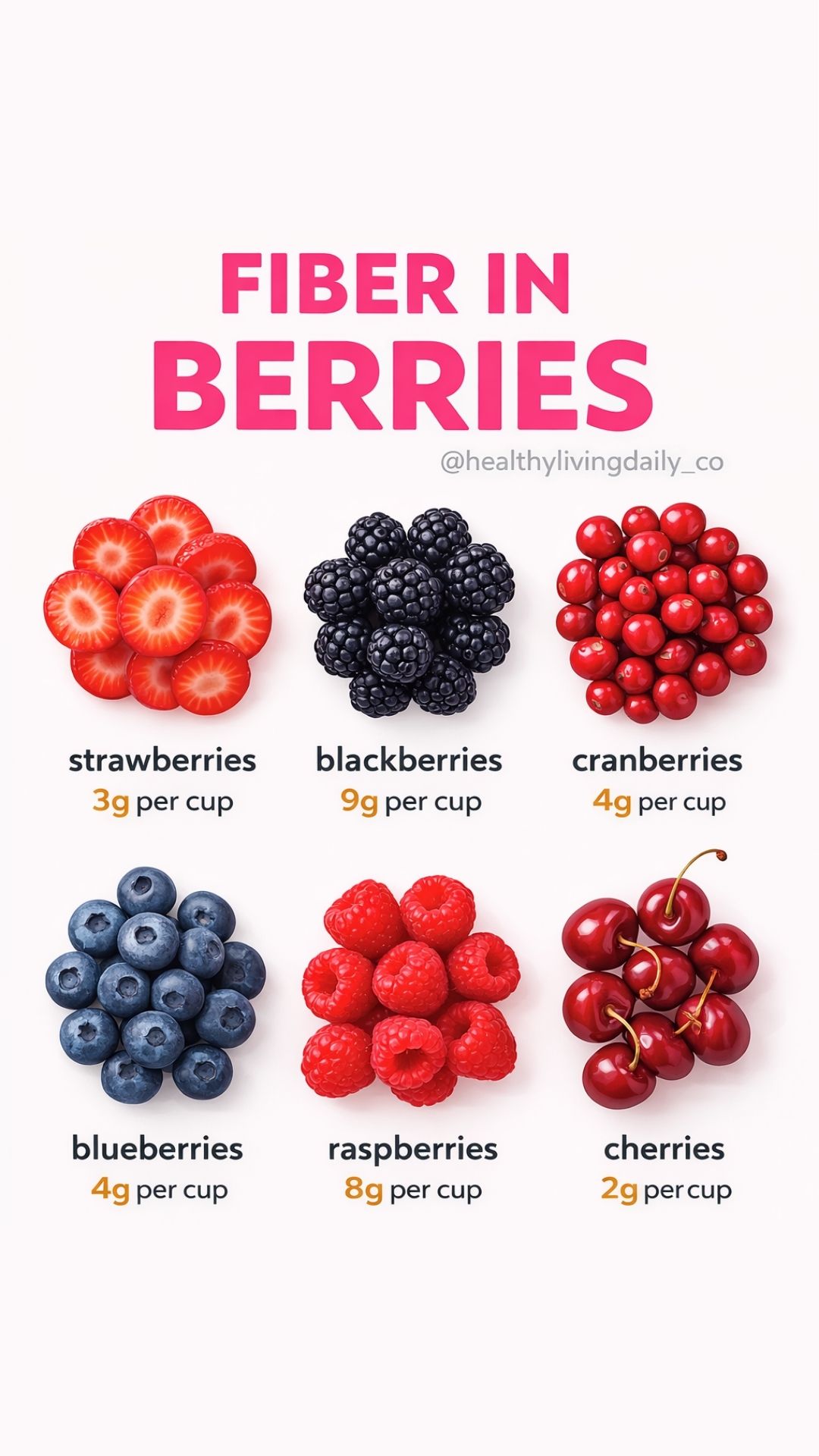
The Big Six: Ranking Berries by Fiber Content
Using the latest nutritional data, let’s look at how your favorite berries stack up.
1. The Fiber Champion: Blackberries (9g per cup)
Blackberries take the gold medal. With a staggering 9 grams of fiber per cup, they provide nearly a third of your daily requirement in one serving.
- Entity Highlight: They are rich in anthocyanins and Vitamin K, supporting both bone health and cardiovascular function.
- Kitchen Tip: Their robust texture makes them the perfect addition to high-protein Greek yogurt or blended into a morning smoothie.
2. The Runner Up: Raspberries (8g per cup)
Coming in at a very close second, raspberries offer 8 grams of fiber per cup. They are unique because they are very low in “Net Carbs” (Total Carbs minus Fiber), making them the #1 choice for the Low-Carb and Keto communities in the U.S.
- Expert Insight: Raspberries contain ellagic acid, a potent polyphenol that researchers are studying for its potential anti-inflammatory properties.
3. The Popular Choice: Blueberries (4g per cup)
While they have less fiber than blackberries (4 grams per cup), blueberries are the most consumed berry in America for a reason.
- Brain Health: Beyond the fiber, blueberries are famous for improving cognitive function and protecting brain cells from oxidative stress.
4. The Tart Powerhouse: Cranberries (4g per cup)
Matching blueberries at 4 grams per cup, fresh cranberries are often overlooked.
- Urinary Health: They contain proanthocyanidins, which prevent bacteria from sticking to the bladder wall.
- Buyer Beware: Most Americans consume cranberries dried and sweetened. To get the fiber benefits without the massive sugar spike, opt for fresh or frozen cranberries in your recipes.
5. The American Classic: Strawberries (3g per cup)
Strawberries are a staple in American households. While they offer 3 grams of fiber per cup, they compensate by being exceptionally high in Vitamin C—providing more than an orange per serving.
6. The Post-Workout Snack: Cherries (2g per cup)
Though technically a stone fruit often categorized with berries, cherries provide 2 grams of fiber per cup.
- Recovery: Cherries are prized by athletes for their high concentration of melatonin and anti-inflammatory compounds that help reduce muscle soreness after a workout.
Ready to optimize your gut health? Join 50,000+ health-conscious Americans and get our weekly “Nutrition Blueprint” newsletter delivered to your inbox. Learn how to eat for energy and longevity. [Sign Up for Free Tips & Recipes]
Pro-Tip: Fresh vs. Frozen Berries
A common question at the grocery store is: “Are frozen berries less healthy?” Actually, the opposite can be true. Frozen berries are typically picked at peak ripeness and “flash-frozen,” which locks in both the fiber structure and the antioxidant profile. For most Americans, frozen berries are a more cost-effective and convenient way to ensure a consistent fiber intake year-round.
3 Simple Ways to Boost Your Fiber Today
- The “Power Bowl”: Swap your sugary cereal for steel-cut oats topped with half a cup of blackberries and a tablespoon of chia seeds.
- The Salad Upgrade: Toss a handful of blueberries or sliced strawberries into a spinach salad with balsamic vinaigrette. The Vitamin C helps your body absorb the iron from the greens.
- The Smart Snack: Keep a bowl of washed raspberries in the fridge. They are nature’s “finger food” and far more satisfying than a bag of chips.
Frequently Asked Questions
Which berry is best for weight loss? Blackberries and raspberries are the best choices because their high fiber-to-sugar ratio keeps insulin levels stable and promotes fullness.
Is it possible to eat too much fiber? If you are currently on a low-fiber diet, increase your berry intake gradually. Drinking plenty of water is essential to help the fiber move through your system smoothly.
Are berries better than apples for fiber? While a medium apple has about 4.5g of fiber, a cup of blackberries provides 9g. For the same volume, berries are often the more efficient fiber source.
Conclusion
Improving your health in 2026 doesn’t have to be a chore. By simply choosing the right berries, you can bridge the fiber gap, support your gut microbiome, and reach your weight loss goals more easily.
Shop Smarter, Eat Better. Download our “High-Fiber Grocery Checklist” today to see which other superfoods you should be adding to your cart! [Download the Free Checklist Now]