You’ve probably heard the old adage, “An apple a day keeps the doctor away.” But for the millions of Americans managing Type 2 diabetes, pre-diabetes, or simply trying to shed stubborn weight, not all apples—and certainly not all fruits—are created equal.
While fruit is nature’s candy, packed with essential vitamins and antioxidants, some varieties can send your blood sugar on a roller coaster ride. If you’ve ever felt a sudden burst of energy followed by a mid-afternoon “sugar crash,” your snack choice might be the culprit.
The secret to enjoying fruit while keeping your glucose levels steady lies in the Glycemic Index (GI). In this guide, we’ll explore the best low-GI fruits to stock in your kitchen in 2026 and how to eat them for maximum health benefits.
Understanding the Glycemic Index (GI)
The Glycemic Index is a ranking system (from 0 to 100) that measures how quickly a carbohydrate-containing food raises your blood glucose levels.
- Low GI (0–55): Digested slowly, causing a gradual rise in blood sugar. These are your “go-to” fruits.
- Medium GI (56–69): Should be eaten in moderation.
- High GI (70+): Can cause rapid spikes and should be limited.
Why Low-GI Fruits Are a Game-Changer for Your Health
Choosing low-GI fruits isn’t just about managing a medical condition; it’s about optimizing your daily performance.
1. Better Diabetes Management
For those living with diabetes, low-GI foods help prevent long-term complications by reducing the frequency of hyperglycemia (high blood sugar). By keeping your levels within a tight range, you protect your heart, kidneys, and nerves.
2. Sustained Energy and Focus
High-GI snacks lead to a rapid insulin spike, which often results in a “crash” that leaves you feeling irritable and fatigued. Low-GI fruits provide a slow release of energy, keeping you fueled from lunch until dinner.
3. Weight Loss and Appetite Control
When insulin levels are constantly high, your body stays in “fat-storage mode.” By opting for low-GI options, you keep insulin levels low, making it easier for your body to burn stored fat. Plus, these fruits are usually high in fiber, which keeps you feeling full longer.
Pro Tip: Always choose whole fruits over juices. The fiber in the skin and pulp acts as a natural “speed bump,” slowing down the absorption of sugar into your bloodstream.
Top Low-Glycemic Fruits for Your Grocery List
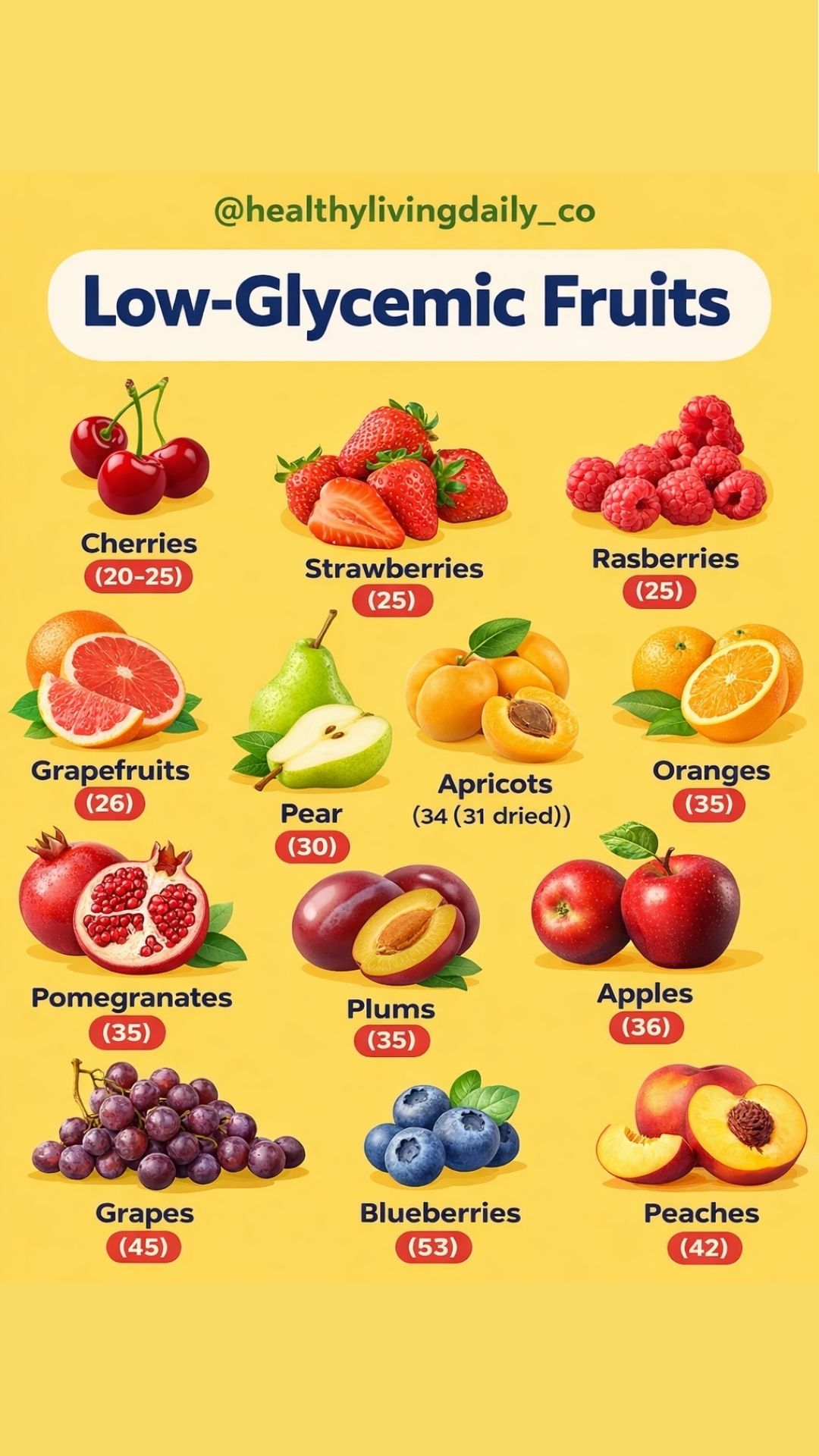
Based on the latest nutritional data, here are the top picks that deserve a spot in your refrigerator.
The Superstars (GI 20–30)
These fruits have the minimal impact on your blood sugar and are perfect for daily consumption.
- Cherries (GI 20–25): Not only are they incredibly low on the index, but cherries are also loaded with anthocyanins. These compounds have been shown to boost insulin sensitivity. Additionally, they are a natural source of melatonin, which can help improve your sleep quality.
- Strawberries & Raspberries (GI 25): Berries are the “holy grail” of low-carb fruit. They are high in Vitamin C and fiber but low in calories. For a classic American breakfast, toss them into a bowl of steel-cut oats.
- Grapefruits (GI 26): Long celebrated in metabolic health circles, grapefruit is excellent for heart health. Be sure to eat the juicy segments rather than just drinking the juice to get the benefit of the pectin fiber.
- Pears (GI 30): Pears are a fiber powerhouse. To get the full benefit, leave the skin on! One medium pear provides about 6 grams of fiber, nearly 25% of your daily needs.
The Mid-Range Favorites (GI 34–45)
These are still considered low-GI and are excellent for adding variety to your diet.
- Apricots (GI 34 fresh): Fresh apricots are a great source of Vitamin A. Interestingly, dried apricots actually have a slightly lower GI (around 31) because the concentration of fiber increases, though you must watch the portion size as they are more calorie-dense.
- Apples & Plums (GI 35–36): The quintessential portable snack. Apples contain quercetin, an antioxidant that may help prevent lung and heart issues.
- Peaches (GI 42): A staple of American summers, peaches are surprisingly friendly to your blood sugar when eaten fresh.
- Grapes (GI 45): Many people fear grapes because they taste very sweet. However, they fall firmly in the low-GI category. The key here is portion control—stick to about 15-20 grapes per serving.
The Nutritional Powerhouse (GI 53)
- Blueberries (GI 53): While near the top of the “low” range, blueberries are non-negotiable for brain health. Known as “brain berries,” they are linked to improved memory and cognitive function as we age.
Smart Eating Strategies: How to Pair Your Fruit
It’s not just what you eat, but how you eat it. Follow these “Golden Rules” to keep your glucose levels flat:
- The “Protein + Fat” Pairing: Never eat fruit “naked.” Always pair your fruit with a source of protein or healthy fat. Try an apple with almond butter, berries with full-fat Greek yogurt, or a pear with a few walnuts. The fat and protein further slow down sugar digestion.
- The Palm Rule: A single serving of fruit should be roughly the size of your palm.
- Timing is Everything: Try to eat fruit during or immediately after a meal that was high in fiber and protein. This prevents the fruit’s sugar from hitting an empty stomach and causing a faster spike.
- Avoid the “Syrup Trap”: When buying canned fruit, ensure it is packed in water or its own juice, never “heavy syrup.” Better yet, stick to the produce aisle or the frozen section (with no added sugar).
Frequently Asked Questions (FAQ)
Can diabetics eat grapes?
Yes! Grapes are a low-GI fruit (GI 45). However, because they are easy to overeat, diabetics should measure their portions (about 1/2 cup) and pair them with a protein like cheese or nuts.
What is the absolute lowest GI fruit?
Cherries generally hold the title for the lowest GI, ranging between 20 and 25 depending on the variety and ripeness.
Is dried fruit okay for weight loss?
Dried fruit like apricots can be low-GI, but they are very calorie-dense and easy to overconsume. For weight loss, fresh, whole fruit is almost always the better choice because the water content helps you feel full.
Does ripening change a fruit’s GI score?
Yes. As fruit ripens, the starches convert into sugars. A very ripe, spotted banana has a much higher GI than a slightly green one. The same applies to peaches and pears.
Conclusion
Incorporating fruit into your diet doesn’t have to be a source of anxiety. By choosing low-glycemic options like berries, cherries, and apples, you can satisfy your sweet tooth while supporting your metabolic health. Remember, small swaps—like choosing a bowl of cherries over a slice of watermelon—can lead to massive improvements in your energy and waistline over time.
Disclaimer: This article is for informational purposes only and does not constitute medical advice. Always consult with your healthcare provider or a registered dietitian before making significant changes to your diet, especially if you are managing a chronic condition like diabetes.