In the fast-paced landscape of 2026, the “Sunday scaries” and back-to-back Zoom fatigue have become more than just memes—they are a daily reality for millions of Americans. While a spa day or a digital detox helps, the most sustainable way to manage anxiety might actually be sitting in your pantry.
The emerging science of the gut-brain axis suggests that what we eat directly influences how we feel. Chronic stress triggers the release of cortisol, our body’s “fight-or-flight” hormone, which can lead to inflammation, brain fog, and fatigue. Fortunately, nature provides a literal “chill pill” through specific nutrients.
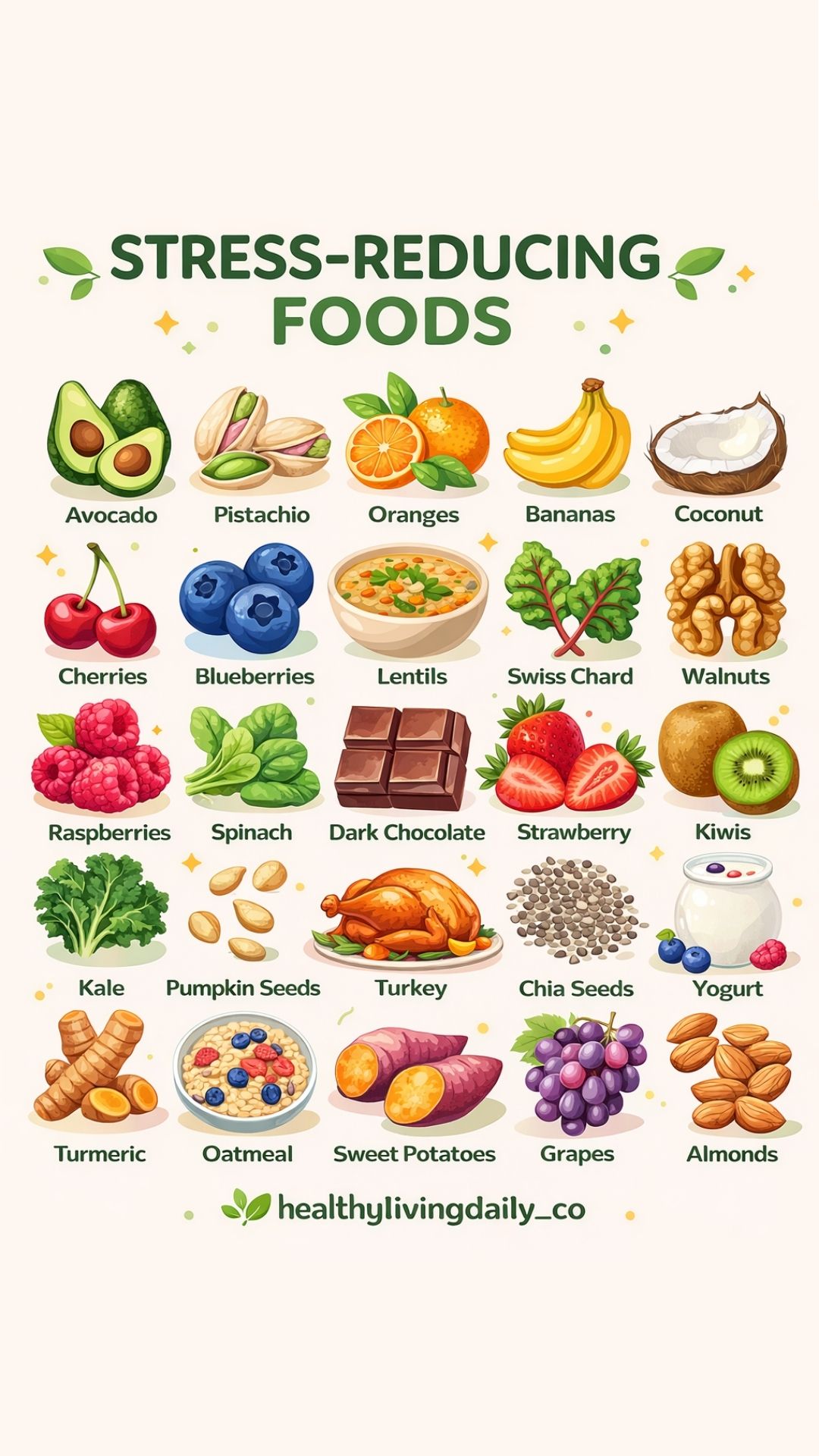
Here is your ultimate science-backed grocery list featuring 25 powerhouse foods to help you lower cortisol and reclaim your calm.
1. The Power of Berries and Antioxidants
Oxidative stress is a silent contributor to anxiety. Berries are packed with Vitamin C and flavonoids, which act as a biological shield for your brain.
- Blueberries: Often called “brain berries,” these are loaded with anthocyanins that help the brain produce dopamine—the “reward” chemical.
- Cherries: Rich in melatonin and polyphenols, they help regulate your circadian rhythm, ensuring stress doesn’t steal your sleep.
- Raspberries & Strawberries: High concentrations of Vitamin C help your body bounce back from high-cortisol situations more quickly.
- Grapes: Contain resveratrol, which has been linked to lower levels of social anxiety in clinical observations.
Quick Tip: Toss a handful of frozen berries into your morning smoothie to start your day with an antioxidant defense.
2. Leafy Greens: Your Natural Dose of Magnesium
If you feel physically “tight” or jittery, you might be low on magnesium. This mineral is essential for muscle relaxation and regulating the nervous system.
- Spinach: A top source of magnesium. It helps prevent the “crash” after a stressful event.
- Kale: Packed with folate, which helps produce dopamine and serotonin.
- Swiss Chard: Contains a unique mix of antioxidants that stabilize blood sugar, preventing the “hangry” irritability that mimics anxiety.
Pro-Tip: Massaging kale with olive oil makes it easier to digest and increases the absorption of its fat-soluble vitamins.
3. Healthy Fats & Crunchy Stress-Relievers
The act of chewing crunchy foods can actually help relieve jaw tension (a common physical sign of stress). When those foods are also rich in Omega-3s, the benefits are doubled.
- Walnuts: The “king” of nuts for brain health, providing plant-based Omega-3s that support cognitive function under pressure.
- Almonds: High in Vitamin E, an antioxidant that protects brain cells from stress-induced damage.
- Pistachios: Hand-shelling pistachios is a form of “mindful eating” that forces you to slow down.
- Pumpkin Seeds: One of the best sources of zinc, which is vital for brain development and mood regulation.
- Chia Seeds: Provide steady energy, preventing the blood sugar spikes and dips that cause mood swings.
4. Tropical Mood Boosters
Tropical fruits are more than just a vacation treat; they contain specific electrolytes and fats that nourish the nervous system.
- Avocado: Rich in B-vitamins and monounsaturated fats. B-vitamins are essential for healthy nerves and brain cells.
- Bananas: High in potassium, which helps regulate blood pressure during stressful moments.
- Coconut: Medium-chain triglycerides (MCTs) provide instant fuel for the brain, helping you stay focused when overwhelmed.
- Kiwis: A surprise powerhouse of Vitamin C and serotonin precursors.
- Oranges: The scent alone can lower anxiety, but eating them provides the Vitamin C needed to keep cortisol in check.
5. The “Comfort” Foods That Actually Work
Forget high-sugar snacks that lead to a crash. These complex carbs and fermented foods provide long-lasting serenity.
- Dark Chocolate: Ensure it is at least 70% cocoa. It reduces stress hormones and releases endorphins.
- Oatmeal: A complex carbohydrate that prompts the brain to produce serotonin. It’s like a “hug in a bowl” for your nervous system.
- Yogurt: Probiotics are key. A healthy gut biome communicates with the brain via the vagus nerve to reduce anxiety levels.
- Sweet Potatoes: They satisfy the craving for something sweet and starchy while providing fiber to keep blood sugar stable.
6. Protein & Spice: The Secret Ingredients
Building blocks like amino acids and anti-inflammatory compounds are the final pieces of the stress-management puzzle.
- Turkey: Famous for tryptophan, the amino acid that converts into serotonin (the “feel-good” hormone) and melatonin (the “sleep” hormone).
- Lentils: High in folate and B6, which are crucial for energy metabolism and emotional balance.
- Turmeric: Curcumin is a powerful anti-inflammatory. Since stress causes inflammation, turmeric helps protect the brain from the long-term effects of high cortisol.
Practical Application: The 2026 Stress-Buster Meal Plan
Transitioning to a stress-reducing diet doesn’t have to be complicated.
- Breakfast: Steel-cut oatmeal topped with blueberries, chia seeds, and a dollop of Greek yogurt.
- Lunch: A large spinach and kale salad with sliced turkey, avocado, and a sprinkle of pumpkin seeds.
- Snack: An orange and a handful of walnuts or pistachios.
- Dinner: Roasted sweet potatoes and lentil stew seasoned with turmeric and black pepper.
Conclusion: Small Bites, Big Changes
Stress management isn’t just about what you do at the gym or in meditation; it’s about what you put on your fork. By incorporating these 25 foods into your routine, you are giving your brain the raw materials it needs to stay resilient in an increasingly demanding world.
Ready to transform your kitchen into a sanctuary of calm?
📥 [Download Our “Stress-Free Grocery List” PDF Guide]
Join over 50,000 health-conscious readers and get our weekly “Mindful Menu” newsletter delivered straight to your inbox. Start your journey to a calmer 2026 today.
[Sign Up Now & Get Your Free Guide]
Disclaimer: This content is for informational purposes only and does not constitute medical advice. Always consult with a healthcare professional before making significant changes to your diet, especially if you have underlying health conditions.