If you’ve walked down the wellness aisle of any American grocery store recently, you’ve likely seen the terms “Prebiotic” and “Probiotic” plastered across everything from soda cans to cereal boxes. While the “Gut-Health Revolution” is in full swing, there is still a massive amount of confusion regarding what these terms actually mean and how they affect your daily energy, mood, and digestion.
Are they the same thing? Do you need both? And more importantly, which foods should you actually be putting in your cart?
Let’s break down the science of the gut microbiome into a simple, actionable guide for your 2026 wellness journey.
The Core Difference: “The Fuel” vs. “The Resident”
To understand gut health, imagine your digestive system as a thriving internal garden.
- Probiotics are the seeds. They are live, beneficial bacteria that move into your “garden” to help keep out weeds (bad bacteria) and keep the soil healthy.
- Prebiotics are the fertilizer. These are specialized plant fibers that humans cannot digest, but they serve as the essential food source for the probiotics already living in your system.
Without prebiotics, your probiotics will starve. Without probiotics, the fertilizer has nothing to grow. You need both to maintain a balanced microbiome.
1. Prebiotics: Fueling Your Internal Army
Prebiotics aren’t actually “alive.” They are complex carbohydrates—mostly fibers like inulin and pectin—that travel through your small intestine undigested until they reach the colon. There, they ferment and become a feast for your “good” bacteria.
Top Prebiotic Foods to Add to Your Diet:
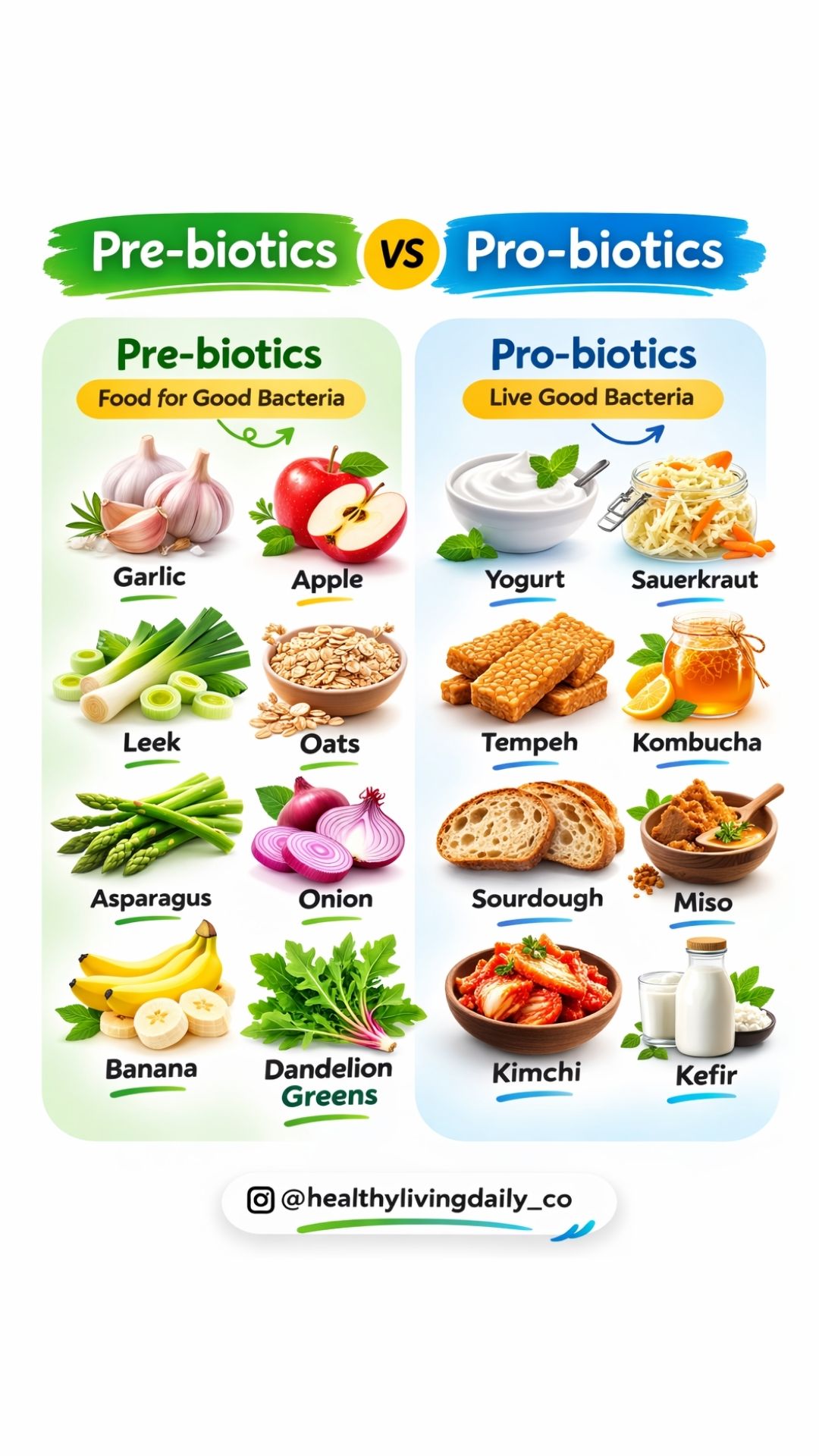
- Garlic & Onions: These kitchen staples are packed with inulin. For the best effect, try including some raw garlic in your salad dressings.
- Oats: A classic American breakfast choice. Oats contain beta-glucan fiber, which not only feeds gut bacteria but also helps manage cholesterol.
- Bananas & Apples: Simple, portable snacks. Apples are rich in pectin, which helps increase the population of Bifidobacterium.
- Leeks & Asparagus: These veggies are high-fiber powerhouses that provide a sophisticated crunch to any meal while supporting digestive regularity.
- Dandelion Greens: Often overlooked, these greens are one of the most concentrated sources of prebiotic fiber available in the produce section.
Pro-Tip: If you aren’t used to a high-fiber diet, start slow. Gradually increasing your prebiotic intake helps prevent the temporary bloating that can occur as your bacteria start “feasting.”
2. Probiotics: The Live Support Team
Probiotics are the “good guys”—the billions of microscopic organisms that help you digest food, produce vitamins, and regulate your immune system. In the U.S., most people get their probiotics through fermented foods or high-quality supplements.
Essential Probiotic Foods for Your Fridge:
- Yogurt & Kefir: Look for the “Live and Active Cultures” seal. Kefir is often even more potent than yogurt, containing a wider variety of bacterial strains.
- Sauerkraut & Kimchi: Fermented cabbage is a traditional gut-health secret. Whether it’s the German-style sauerkraut or the spicy Korean kimchi, these provide a massive dose of Lactobacillus.
- Kombucha: This fizzy, fermented tea has become a staple in American cafes. It’s a refreshing way to sip on probiotics throughout the day.
- Tempeh & Miso: For those on a plant-based diet, these fermented soy products offer both high-quality protein and gut-healing microbes.
- Sourdough Bread: Traditional sourdough fermentation breaks down gluten and phytic acid, making it significantly easier on the stomach than standard white bread.
Ready to transform your digestion? > Don’t guess—test! Understanding your unique microbiome is the first step to true wellness. [Click here to browse our curated selection of high-potency probiotics and fiber blends designed for optimal gut balance.]
The Synergy: Why “Synbiotics” Matter
When you consume prebiotics and probiotics together, it’s called Synbiotics. This is the gold standard for gut health. By eating them in the same meal, you are essentially providing the “seeds” and the “fertilizer” at the same time, ensuring the bacteria have the best chance to survive and thrive.
Why Americans Are Prioritizing Gut Health in 2026:
- Immune Support: Did you know that roughly 70% of your immune system is located in your gut? A balanced microbiome is your first line of defense against seasonal bugs.
- The Gut-Brain Axis: Science has confirmed a direct link between your gut and your brain. A healthy gut can lead to better focus, reduced anxiety, and improved mood.
- Metabolic Health: A diverse microbiome is linked to easier weight management and better blood sugar regulation.
Simple Tips for the American Lifestyle
Maintaining a healthy gut doesn’t have to be a full-time job. Here are three easy ways to integrate these foods into your busy schedule:
- The Power Breakfast: Add sliced bananas and a handful of oats into your Greek yogurt. You’ve just created a prebiotic-probiotic powerhouse in under five minutes.
- The Smart Sandwich: Swap your usual bread for sourdough and add a side of sauerkraut or pickles (fermented, not just vinegared).
- The Evening Reset: Instead of a sugary soda, grab a Kombucha. If you’re feeling adventurous, try a warm bowl of miso soup with steamed asparagus.
Conclusion: Feed the Good, Starve the Bad
Your gut is a complex ecosystem that requires constant care. By focusing on feeding your bacteria with prebiotics and replenishing them with probiotics, you are investing in your long-term health, energy, and mental clarity.
Take Action Today: Don’t wait for digestive issues to start—be proactive. Pick one prebiotic food (like apples) and one probiotic food (like kefir) to add to your grocery list this week. Your gut will thank you.
Disclaimer: While these foods are generally safe for everyone, if you have a chronic digestive condition like IBS or SIBO, please consult with a healthcare professional or a registered dietitian before making significant dietary changes or starting new supplements.