In the modern digital era, the average American spends over eight hours a day staring at a screen. Whether it’s a smartphone, a laptop, or a television, this constant exposure to high-energy blue light is taking a toll on our ocular health. From digital eye strain to more serious long-term conditions like Age-Related Macular Degeneration (AMD), our eyes are under constant pressure.
While blue-light-blocking glasses and eye drops offer temporary relief, true vision longevity starts from within. Research suggests that specific antioxidants and nutrients can act as “internal sunglasses,” shielding your retinas from oxidative stress.
In this guide, we break down the “Big Three” vitamins—A, C, and E—and the superfoods you need to keep your vision sharp well into your golden years.
Vitamin E: The Cellular Shield Against Oxidative Stress
Vitamin E is a potent fat-soluble antioxidant that plays a crucial role in protecting eye cells from free radicals—unstable molecules that break down healthy tissue. In the context of eye health, Vitamin E is particularly effective at slowing the progression of AMD and preventing the clouding of the eye lens.
Top Sources for Your Daily Shield:
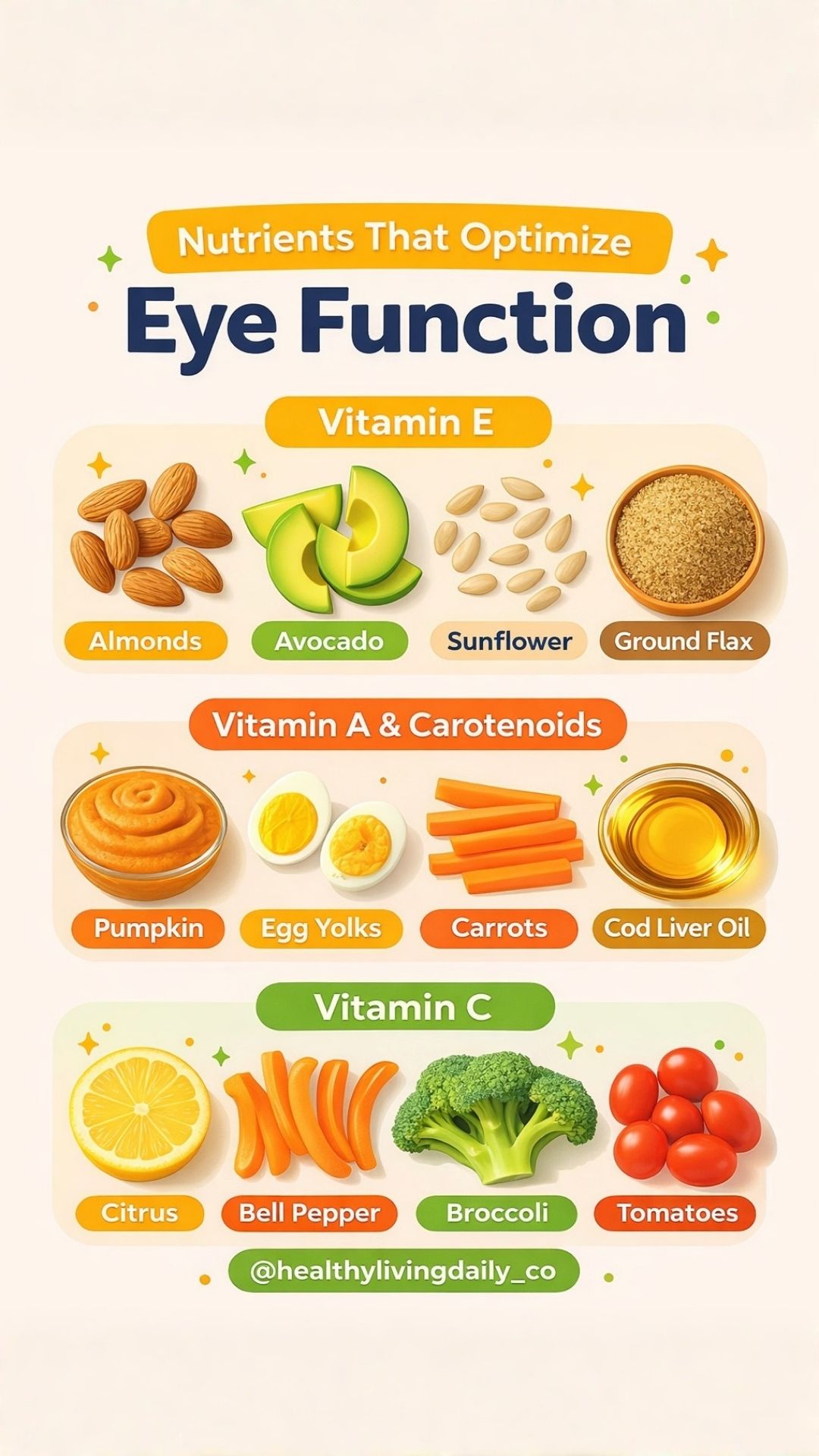
- Almonds: Just one ounce of almonds provides about half of your daily recommended intake of Vitamin E. They are the perfect “on-the-go” snack for office workers.
- Avocado: Beyond being a staple of the American brunch, avocados contain healthy fats that help your body absorb other fat-soluble vitamins more efficiently.
- Sunflower Seeds: A nutrient-dense topper for salads that provides a massive antioxidant boost.
- Ground Flax: Flaxseeds are rich in Vitamin E and Omega-3 fatty acids, which work in synergy to maintain the oily layer of your tear film, preventing dry eye syndrome.
Pro-Tip: Pair your Vitamin E sources with a source of Vitamin C to maximize their antioxidant regeneration capabilities.
Vitamin A & Carotenoids: The Night Vision Essentials
If you’ve ever struggled to see while driving at night, you might be low on Vitamin A. This vitamin is a component of rhodopsin, a protein in your eyes that allows you to see in low-light conditions. Furthermore, carotenoids like Lutein and Zeaxanthin act as a natural sunblock for the macula.
The Powerhouse Food List:
- Pumpkin & Carrots: These orange-hued vegetables are packed with beta-carotene, which the body converts into Vitamin A. They are essential for maintaining a clear cornea.
- Egg Yolks: Often unfairly maligned, egg yolks are one of the most “bioavailable” sources of Lutein and Zeaxanthin, meaning your body absorbs them much easier than from synthetic supplements.
- Cod Liver Oil: A traditional powerhouse, this oil is one of the most concentrated sources of Vitamin A and Vitamin D available, supporting both retina health and immune function.
Are you getting enough Lutein? > [Explore our Vision Support Supplement Guide here] — Optimized for those who can’t always get their greens in.
Vitamin C: Supporting Ocular Blood Vessels
Your eyes have a high metabolic rate, which means they produce a lot of metabolic waste. Vitamin C is essential for the health of the tiny blood vessels (capillaries) in your eyes and is vital for the production of collagen, which provides structure to the eye.
Best Foods for Vascular Health:
- Citrus Fruits: Oranges, grapefruits, and lemons are classic choices, but they remain some of the most effective ways to lower your risk of developing cataracts.
- Bell Peppers: Interestingly, a red bell pepper contains nearly triple the Vitamin C of an orange.
- Broccoli & Tomatoes: These are rich in Vitamin C and also contain small amounts of other phytonutrients that protect against oxidative damage in the retina.
Beyond the Plate: Lifestyle Habits for Digital Wellness
While nutrition is the foundation, your daily habits reinforce your eye health. To prevent “Computer Vision Syndrome,” we recommend the 20-20-20 Rule:
- Every 20 minutes, take your eyes off the screen.
- Look at something 20 feet away.
- Hold your gaze for at least 20 seconds.
Additionally, ensure you stay hydrated to prevent dry eyes and always wear UV-rated sunglasses when outdoors, regardless of the season.
The Path to 20/20 Longevity
Maintaining optimal eye function isn’t about a single “miracle food”—it’s about a colorful, consistent diet. By incorporating the reds of tomatoes, the oranges of carrots, and the greens of avocados, you are building a biological fortress for your sight.
Ready to take the next step in your wellness journey?
- Download our 2026 Eye-Healthy Grocery Checklist: [Link to Download]
- Subscribe to our Newsletter: Get weekly tips on nutrition and digital wellness delivered to your inbox.
- Follow us on Instagram: [@healthylivingdaily_co] for daily visual reminders to eat for your eyes.
Disclaimer: This article is for informational purposes only and does not constitute medical advice. Always consult with an optometrist or ophthalmologist for regular eye exams and before starting new supplement regimens.